
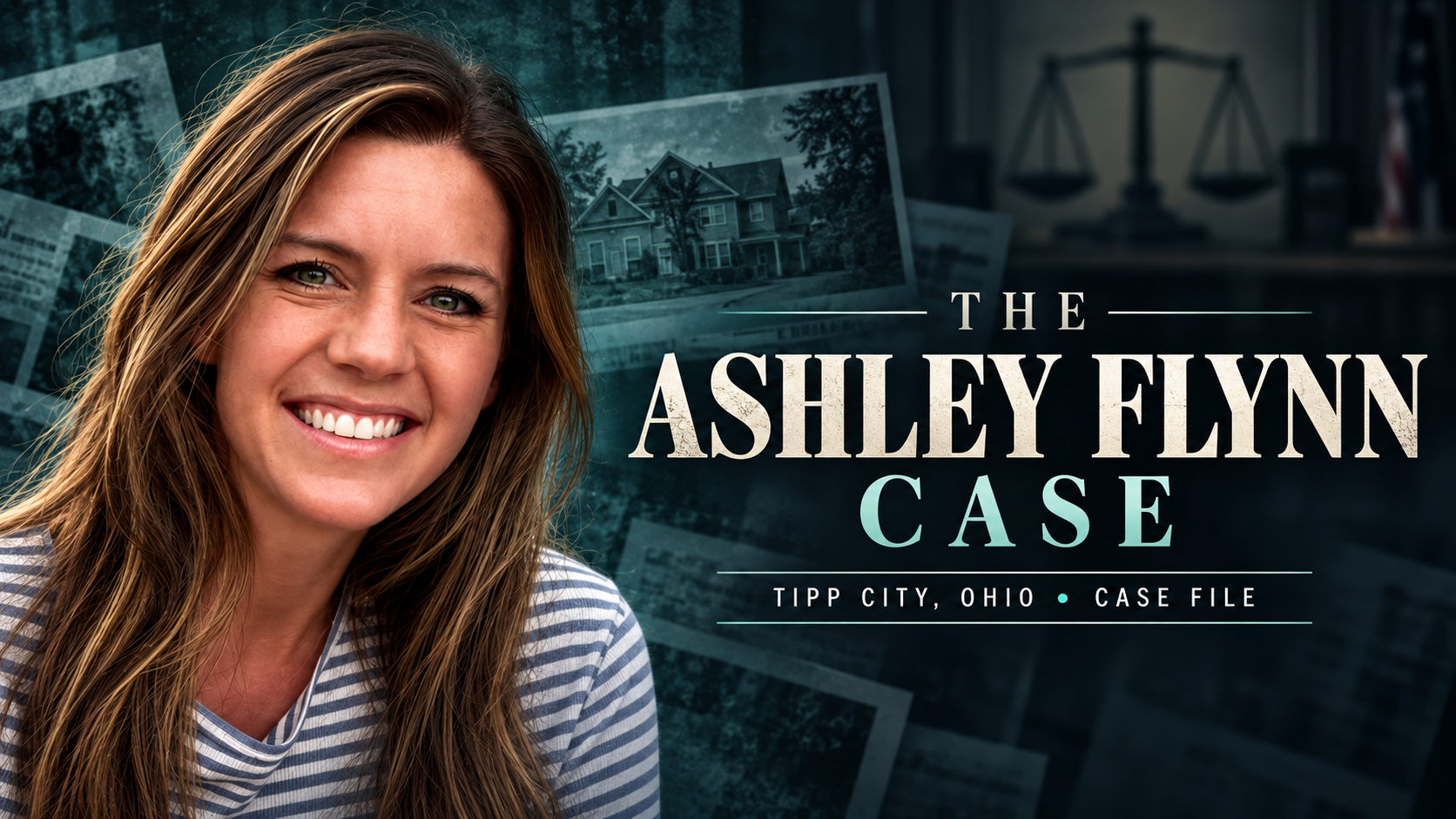
Ashley Flynn was a mother, teacher, volleyball coach, church volunteer, and valued member of her Ohio community. This page follows the evidence presented in the prosecution of her husband, Caleb Flynn, while keeping Ashley—and the life she lived—at the center of the story.
Last updated September 27, 2026 · Trial ongoing · No verdict announced
Remembering Ashley
Ashley Flynn was born February 24, 1988, and died February 16, 2026. She worked as a teacher, served as a seventh-grade volleyball coach, volunteered through her church, and was raising two daughters.
Friends, relatives, students, and members of the community have described Ashley as compassionate, energetic, and devoted to the people around her. Her life should not be reduced to the circumstances of her death or the allegations against her husband.
Where the case stands
Caleb Flynn has pleaded not guilty following an 11-count indictment connected to Ashley’s death.
Prosecutors allege that Caleb shot Ashley while she was sleeping in their Tipp City home and then staged the scene to resemble a break-in. The defense argues that investigators focused on Caleb too quickly and that the circumstantial, digital, and physical evidence does not prove he was the shooter.
The charges remain allegations. Caleb Flynn is presumed innocent unless and until the state proves its case beyond a reasonable doubt.
What happened on February 16
Caleb called 911 during the early morning hours of February 16, 2026. He reported that an intruder had entered the family’s home and shot Ashley.
Investigators found Ashley in the bedroom. Testimony has described two 9mm cartridge casings, bullet fragments recovered from the bedding, and damage to an exterior door. No murder weapon has been recovered.
The prosecution contends that the damaged door was part of a staged crime scene. Investigators testified that wood debris, the condition of the doorway, the position of a refrigerator, the lack of reported exterior activity, and other observations were inconsistent with the intruder account. The defense has challenged those conclusions and questioned whether investigators adequately considered other ways someone could have entered the home.

The text-message evidence
Prosecutors presented more than 100,000 messages exchanged between Caleb Flynn and Alleigha Botner during their relationship. Local trial coverage reported that approximately 107,000 messages were organized into 34 binders.
The messages span many months. They document an affair, repeated discussions about Caleb leaving Ashley, deadlines for him to act, arguments about divorce, and numerous hostile references to Ashley.
Selected messages presented during the trial
May 2025 — Caleb:
“If I could literally kill her and not go to hell, I would do it in a heartbeat.”
In the same exchange, Caleb later wrote: “I hate her. Loathe her. I want her dead.”
July 2025 — Alleigha:
“I want to kill her, Caleb.”
Caleb:
“That makes two of us.”
Prosecutors also described a message in which Caleb said he had stayed awake thinking about ways to kill Ashley without going to jail.
February 15, 2026 — Caleb:
“Actions will come tomorrow.”
Other messages from the final hours included statements about choosing Botner and being “free.”
Why the context matters
The prosecution argues that the messages reveal motive, intent, planning, and an escalating timeline that ended with Ashley’s death.
The defense argues that the messages show an unhealthy affair, anger, exaggeration, and emotionally charged language—but that offensive words are not proof that Caleb committed murder.
The messages are evidence for the jury to evaluate. Individual excerpts should be read as part of the complete timeline rather than treated as a verdict by themselves.
What Ashley’s phone showed
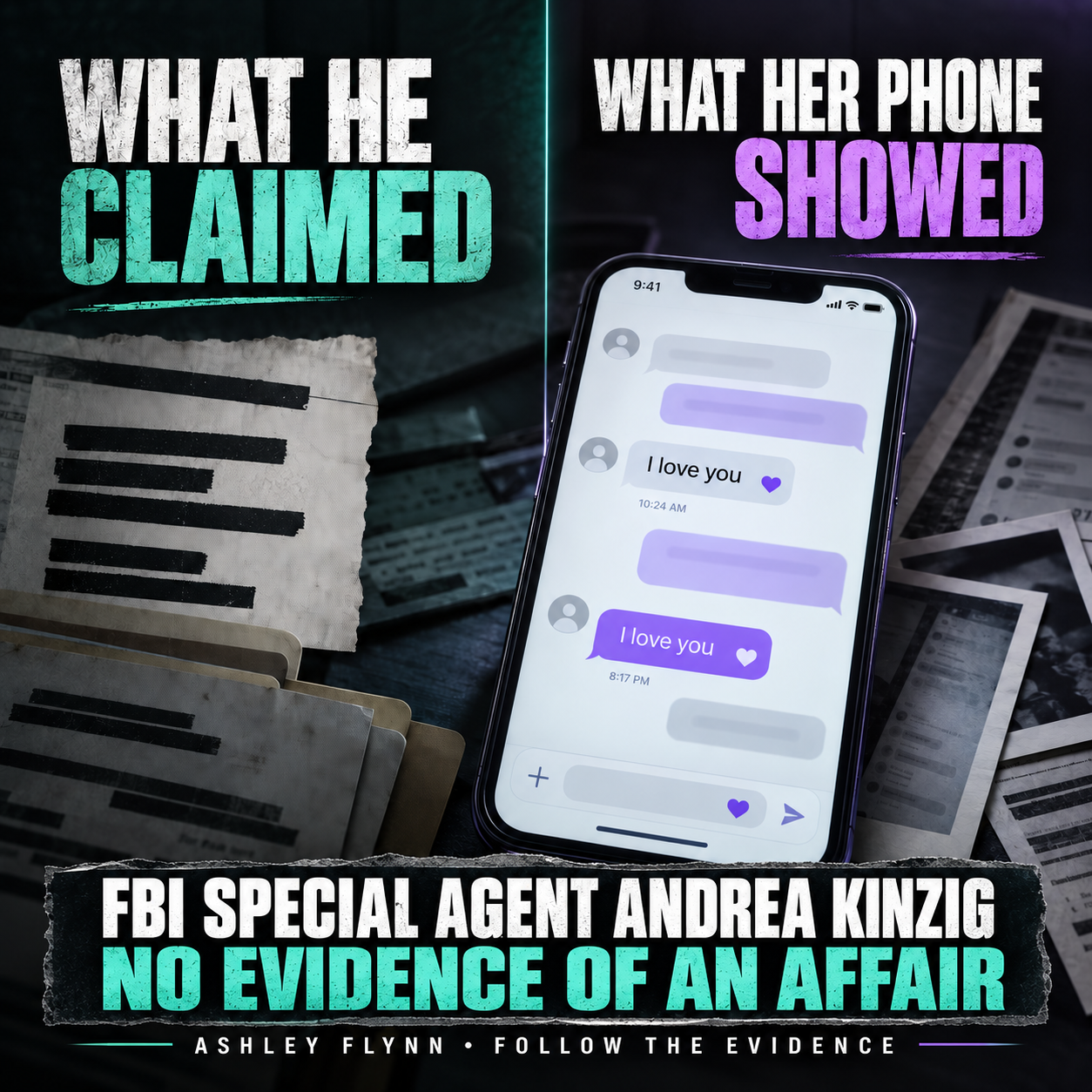
The allegation that Ashley had been unfaithful appears repeatedly in Caleb’s messages to Botner. During the trial, however, the FBI testified that its review did not uncover digital evidence supporting that allegation.
That distinction is important: the affair allegation was part of the explanation Caleb reportedly gave Botner for his hostility toward Ashley, but investigators testified that they could not substantiate it through the devices and communications they reviewed. A digital examination cannot prove every aspect of a person’s private life.
Alleigha Botner’s testimony
Botner testified that her relationship with Caleb began in approximately March 2024. She described Caleb referring to Ashley as a “roommate,” saying he hated her, and repeatedly promising that he would leave the marriage. Botner also testified about deadlines she gave Caleb and about the messages they exchanged before Ashley’s death.
- Botner was not fully truthful during her first FBI interview.
- She deleted communications and conducted searches relating to deleting or recovering digital evidence.
- She was interviewed again with an attorney present.
- She has not been charged in connection with Ashley’s death.
- She did not receive immunity for her testimony.
- Investigators did not initially search her home or vehicle or collect her DNA and fingerprints.
These facts may affect how the jury evaluates her credibility. They do not, by themselves, establish that Botner participated in or knew about a plan to harm Ashley.
The digital-device timeline
Investigators examined information from phones, an Apple Watch, AirPods, accounts, applications, and other devices. The prosecution argues that portions of the device data help reconstruct movement and activity inside the Flynn home during the period surrounding Ashley’s death.
The defense has emphasized the limitations of this evidence. Device records can indicate activity, but they may not always identify who was carrying or using a device. Experts also acknowledged that some automated records can create false positives or require interpretation.
The physical evidence
- Two WCC 9mm cartridge casings reportedly fired from the same unidentified firearm.
- Bullet fragments recovered from the bedding.
- No recovered murder weapon.
- No foreign DNA identified at the scene.
- No reported blood spatter on Caleb’s clothing.
- Disputed damage to the door associated with the reported break-in.
- Fingerprint and palm-print evidence that must be considered in the context of a shared family home.
The prosecution’s theory
Prosecutors allege that Caleb wanted to begin a new life with Botner, viewed Ashley as the obstacle, discussed killing her, shot her while she slept, removed or disposed of the firearm, damaged the door, and reported a fictional intruder.
The defense’s position
The defense maintains that an affair and hateful messages do not establish murder. It argues that the state lacks the gun, an eyewitness, definitive forensic proof tying Caleb to the shooting, and reliable evidence excluding every other reasonable possibility.
Key timeline
- March 2024: Botner testified that her relationship with Caleb began around this time.
- January 11, 2026: A deadline Botner reportedly gave Caleb to leave the marriage passed.
- February 14: Messages discussed divorce, being free, and removing communication trails.
- February 15: Caleb and Botner exchanged extensive messages. Caleb wrote that “actions will come tomorrow.”
- February 16: Caleb stopped responding to Botner around 12:45 a.m. Device activity was later examined by investigators. At approximately 2:30 a.m., Caleb called 911 and reported an intruder. Ashley was found fatally shot.
- February 19: Caleb was arrested.
- February 20: Botner participated in her first FBI interview and later acknowledged that she had not been fully truthful.
- February 26: Botner was interviewed again with legal counsel present.
- March 18: A grand jury returned an 11-count indictment.
- September 17–18: Jury selection and opening statements began.
- September 23–24: Botner testified about the affair, the messages, her initial statements to investigators, and her understanding of Caleb’s promises.
- September 25: The jury heard testimony concerning Apple data, device evidence, police interviews, and an unsubstantiated murder-for-hire tip.
- September 27: The trial remained ongoing, with no verdict announced.
Documented, alleged, and unproven
Documented in records or testimony
- Ashley died from multiple gunshot wounds in her Tipp City home.
- Caleb reported that an intruder killed her.
- Caleb and Botner had an affair and exchanged more than 100,000 messages.
- A firearm believed relevant to the case has not been recovered.
- Caleb has pleaded not guilty.
- Botner has not been charged and did not receive immunity.
- Investigators testified that they found no digital evidence supporting the allegation that Ashley had an affair.
Still alleged or disputed
- That Caleb shot Ashley.
- That the damaged door was deliberately staged.
- That the messages constituted a plan rather than angry or exaggerated language.
- That the device data identifies who was moving at particular moments.
- That Botner knew Ashley would be harmed or participated in any plan.
- That an unidentified third party entered the home.
- That a reported murder-for-hire tip had any connection to Ashley’s death.
Questions the trial still must answer
- Where is the firearm?
- What caused the door damage, and from which direction was it created?
- How much can the device data reliably establish about movement inside the home?
- Do the messages demonstrate a criminal plan or only violent language?
- Were reasonable alternative suspects and explanations fully investigated?
- Does the combined circumstantial evidence establish guilt beyond a reasonable doubt?
Protecting the children
Ashley and Caleb’s children are minors who experienced an unimaginable loss. Family members have testified that maternal relatives are caring for them. Jaded Evidence will not publish their names, schools, address, precise location, private testimony, or identifying personal details.
Selected sources
- Ashley Flynn’s obituary
- Initial criminal complaint
- Court TV trial evidence tracker
- WHIO Caleb Flynn trial coverage
- WHIO: Botner’s testimony
- WHIO: device evidence and Day 7 testimony
- Associated Press: initial charges and arrest
Editorial note: This is a developing case. Jaded Evidence distinguishes between documented facts, courtroom testimony, prosecution allegations, defense arguments, and unanswered questions. The page will be corrected or updated when new verified information becomes available. No person should be treated as guilty unless proven guilty in court.