

Originally published

REGION: Southeast — Florida
CONTENT NOTE: This article discusses child homicide, suffocation, caregiver access, and historical forensic investigation.
Victims first. Evidence second. Offender third.
Case Overview
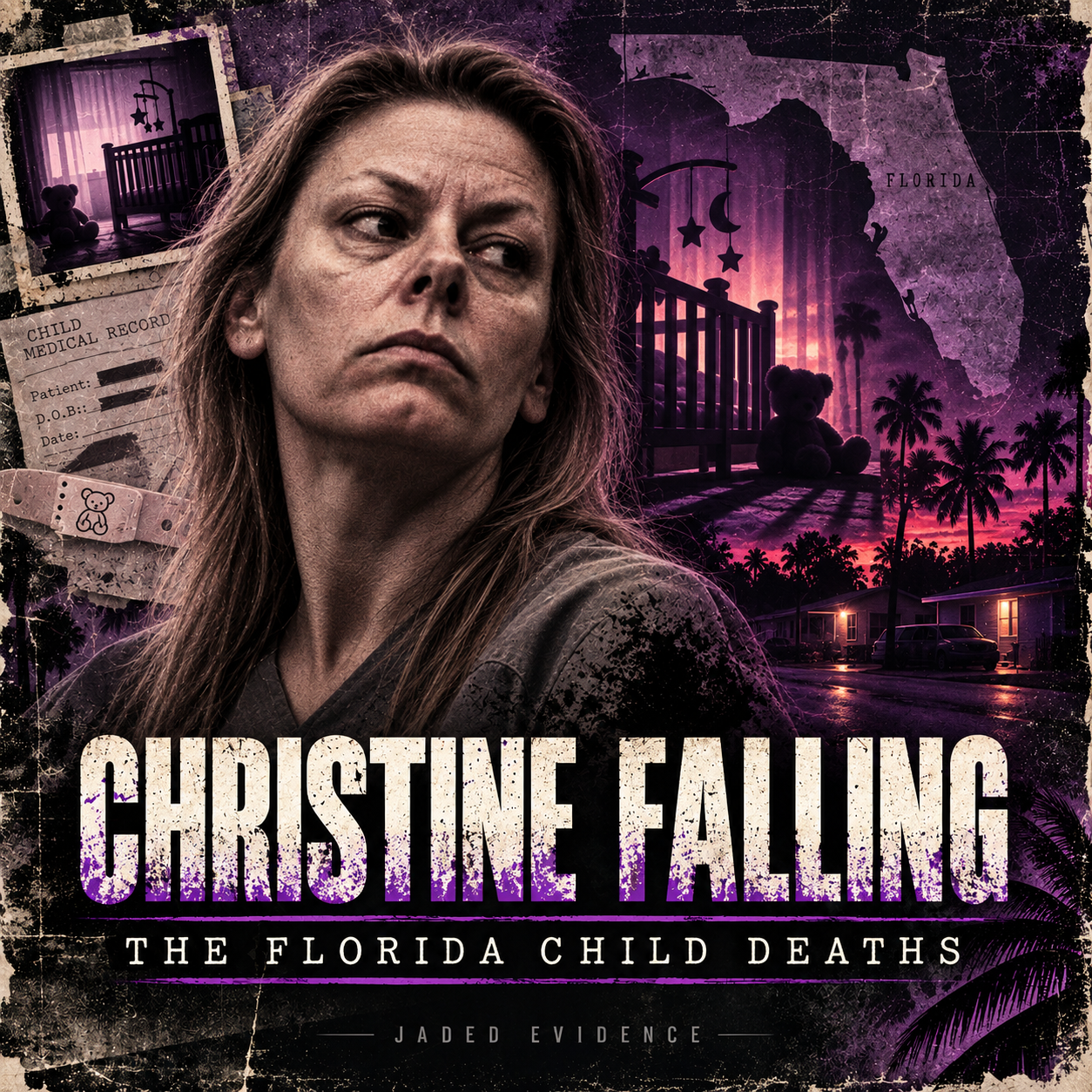
Christine Falling was convicted in Florida after a series of child deaths involving children in her care during the early 1980s.
Caregiver Access
The investigation focused on the repeated presence of Falling during sudden pediatric deaths that had initially appeared unrelated or medically unexplained.
Confession and Plea
Falling ultimately confessed to multiple killings and received a life sentence.
Why This Case Matters
The Falling case highlights the difficulty of recognizing serial homicide when victims are very young and deaths initially resemble natural or unexplained medical events.
Known Victims
Falling pleaded guilty to three child murders:
- Cassidy “Muffin” Johnson
- Jennifer Daniels
- Travis DeWayne Coleman
She was also investigated in the deaths of Jeffrey Michael Davis and Joseph Spring, both children who died while in her care, and in the death of elderly Wilbur G. Swindle. Those cases did not result in separate murder convictions and should remain clearly labeled as suspected/attributed.
Investigation Highlights
- Several deaths had initially been classified as medical events or unexplained pediatric deaths.
- The repeated circumstance—children dying while in the same caregiver’s custody—eventually became the linkage investigators focused on.
- After the 1982 death of Travis Coleman, law enforcement and medical scrutiny intensified and earlier cases were reexamined.
- Falling ultimately entered guilty pleas to three strangulation/suffocation murders and received concurrent life sentences.
Psychiatric and Psychological Record
Contemporary reporting states that Falling spent approximately a week in a psychiatric unit before her arrest. Later accounts have described statements about hearing voices. Those reports do not, by themselves, establish a court-adopted psychotic disorder or insanity finding. No single formal psychiatric diagnosis should be presented as proven unless supported by the underlying evaluation.
Modus Operandi vs. Signature
Modus operandi: Caregiver access to very young victims and suffocation/strangulation in circumstances that could initially resemble sudden natural death.
Signature: There is no well-established ritualistic signature in the public record. The repeated caregiver setting and suffocation method are linkage features and MO, not necessarily psychological signature behaviors.
Sources & Records
Expanded Case Details
Case details: Christine Falling was implicated in the deaths of five children in northern Florida between 1980 and 1982 while working as a babysitter or caregiver. Victims included infants and young children who became unresponsive in her care.
MO and arrest: Investigators focused on the repeated caregiver connection after Travis Coleman’s death. Falling confessed to smothering children; the plea resolved multiple murder counts.
Psychiatric record: Evaluations described intellectual limitations, emotional disturbance and severe personality problems. She was found competent, and the case did not end in an insanity acquittal.
Court, counsel and sentence: Florida prosecutors negotiated guilty pleas that removed the possibility of a death trial. Falling received life imprisonment with a lengthy minimum term before parole eligibility. Accessible summaries do not consistently identify the complete prosecution and defense teams, so the page does not supply uncertain names.
Potential victims: Other childhood deaths and illnesses were reviewed, but five homicide victims form the established core.
The Outwardly Ordinary Life
Falling was a young babysitter trusted with children. She did not have a spouse, children or established profession; the “normal” façade was the familiar role of an available caregiver.
Leave a Reply