

EXHIBIT J · INVESTIGATIVE DEEP DIVE
Filicide: Motive, Mental Illness, and Criminal Responsibility
When a parent kills a child, the word filicide describes the relationship between offender and victim—not the reason it happened. Cases grouped under that single term can involve radically different motives, psychiatric states, abuse histories, family dynamics, and legal outcomes.
Jaded Evidence premise: Filicide is not one crime with one motive. A psychiatric diagnosis does not automatically establish legal insanity, and the absence of a diagnosis does not explain a homicide. This Exhibit J separates clinical evidence, behavioral evidence, motive theories, and legal standards instead of treating them as interchangeable.
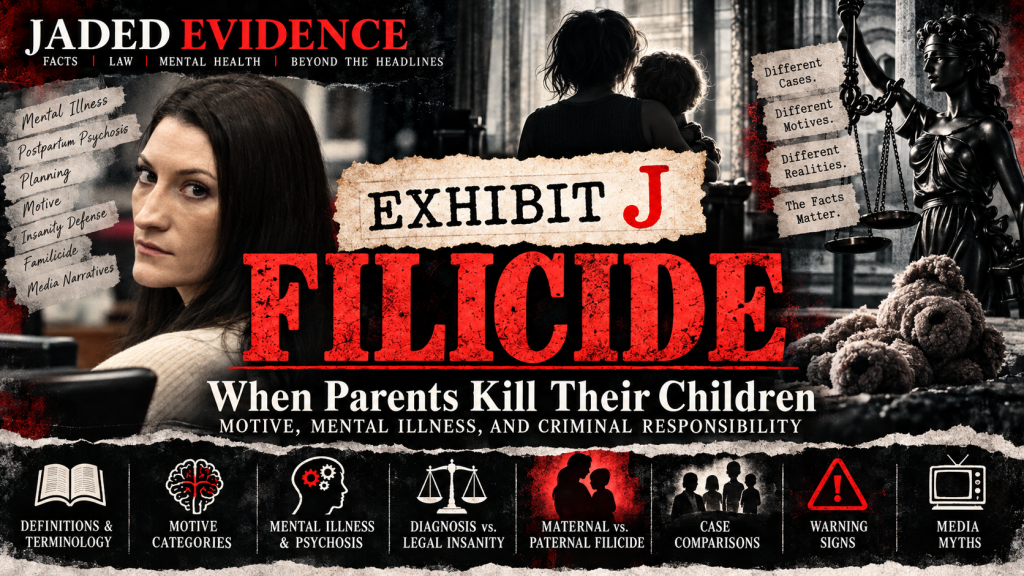
What does “filicide” mean?
Filicide broadly refers to a parent killing a child. Related terms are used more narrowly. Neonaticide generally refers to killing a newborn within the first 24 hours of life; infanticide commonly refers to killing an infant during the first year; and familicide generally describes the killing of multiple family members, often including a partner and children.
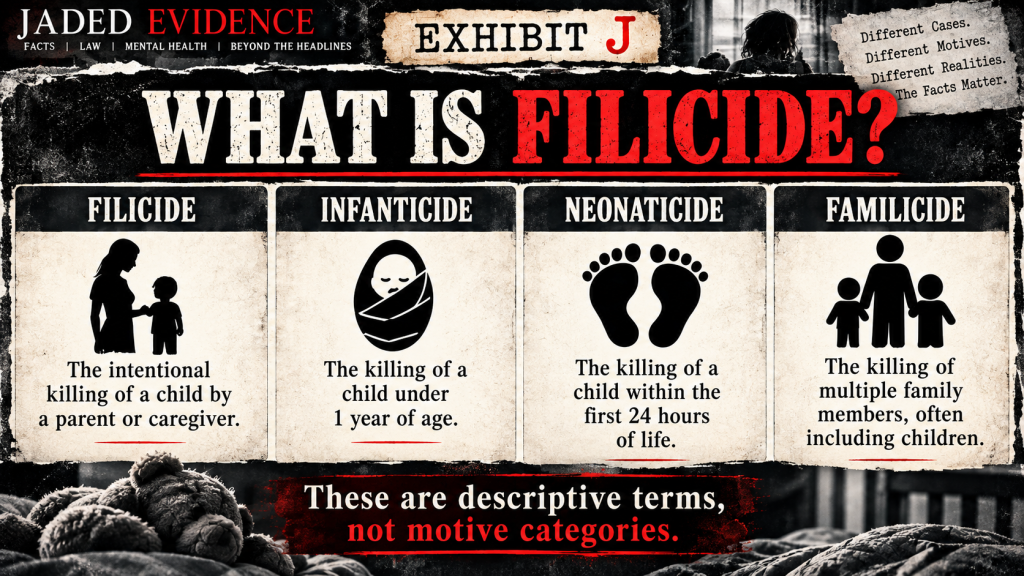
A classic motive framework
Forensic psychiatry literature has long used motive-based frameworks to describe filicide. A frequently cited model associated with psychiatrist Phillip Resnick separates cases into five broad groups: altruistic, acutely psychotic, unwanted child, fatal maltreatment, and spousal or partner revenge. These are research categories—not diagnoses, verdicts, or rigid boxes into which every case must fit.
- Altruistic: the parent believes death will spare the child from suffering, sometimes in the context of suicidality or severe distorted beliefs.
- Acutely psychotic: the killing occurs during severe psychosis without a comprehensible nonpsychotic motive.
- Unwanted child: the child is perceived as an obstacle, burden, or incompatible with the parent’s desired life.
- Fatal maltreatment: death occurs during abuse or neglect, sometimes following repeated violence.
- Partner revenge: the child is killed in an effort to punish or psychologically injure another parent or partner.
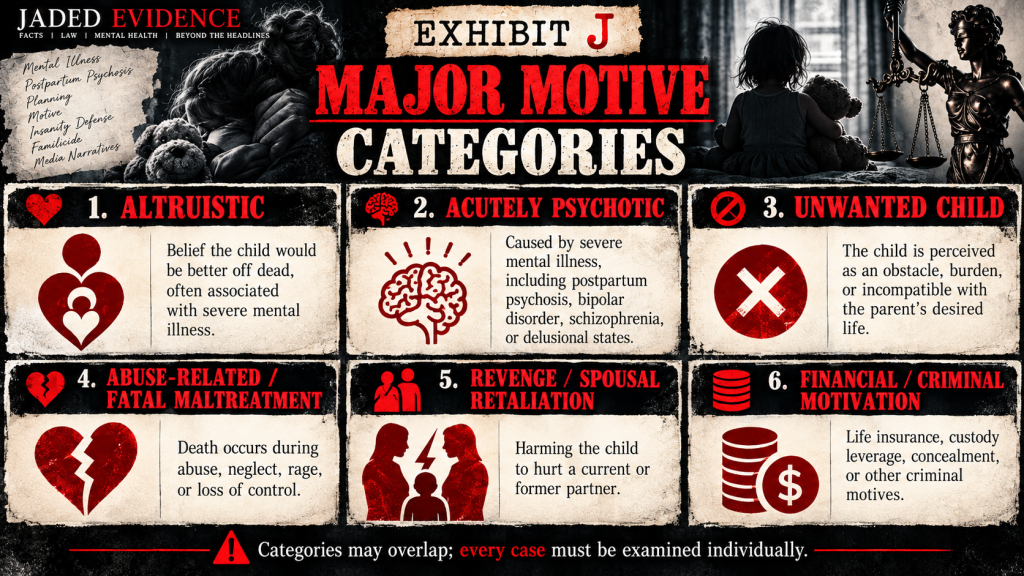
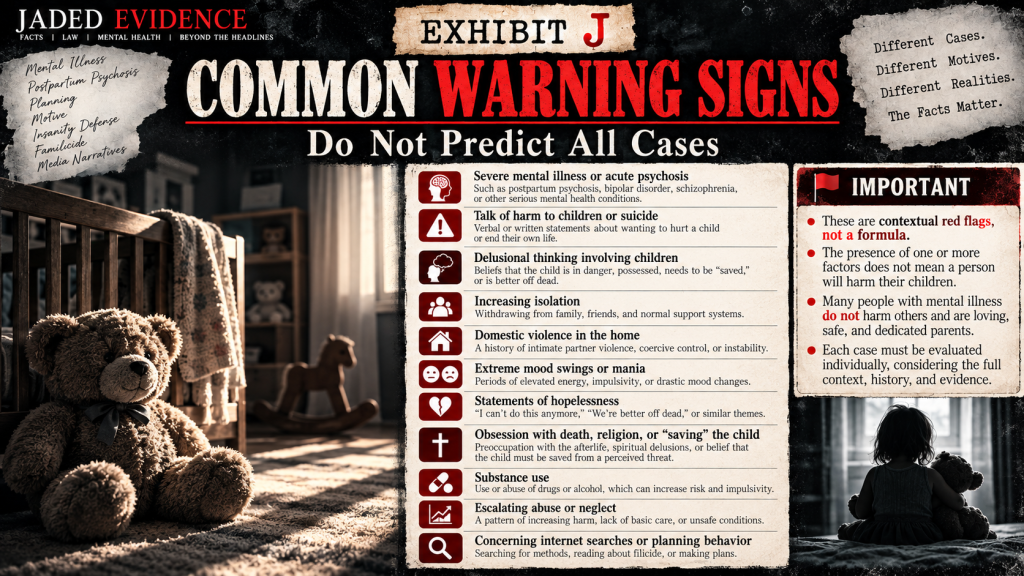
Not every filicide is a mental-illness case
That distinction matters. Reviews of maternal and paternal filicide describe substantial variation in offender characteristics, motives, psychiatric diagnoses, family circumstances, and suicide risk. Serious mental illness may be central in some cases, while other cases are better understood through patterns of abuse, coercive control, revenge, concealment, financial motive, or other evidence.
Postpartum psychosis: rare, severe, and clinically distinct
Postpartum psychosis is a psychiatric emergency involving severe disturbance in mood, thinking, perception, or reality testing. Published literature has examined both suicide and filicide risk in postpartum psychosis. The presence of postpartum psychosis does not mean a parent will harm a child; the overwhelming majority do not. The appropriate clinical takeaway is urgency of recognition and treatment—not prediction of homicide.
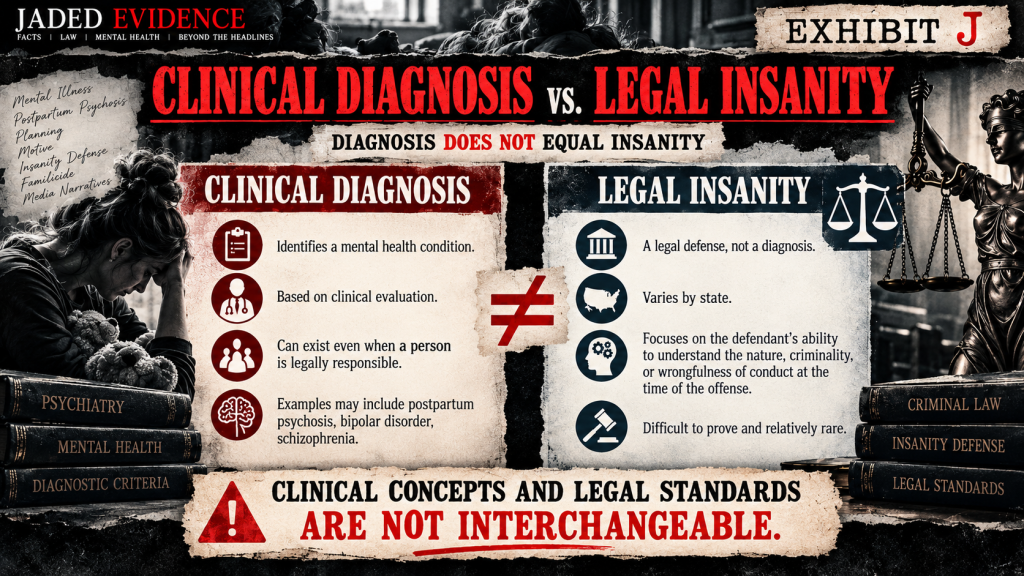
Psychosis is not the same thing as legal insanity
Psychosis is a clinical syndrome. Criminal responsibility is a legal determination. A defendant may have a documented psychotic disorder and still fail to meet a jurisdiction’s insanity standard. Conversely, severe delusions or hallucinations may become central evidence when the governing legal test asks whether a defendant understood the nature, criminality, or wrongfulness of the conduct.
Post-offense behavior is evidence—not a diagnostic shortcut
Calling 911, attempting suicide, hiding evidence, lying to investigators, conducting internet searches, appearing calm, appearing distraught, or making unusual statements can all become relevant evidence. None of these behaviors standing alone proves sanity, insanity, premeditation, remorse, or lack of remorse. Meaning comes from context and the total evidentiary record.
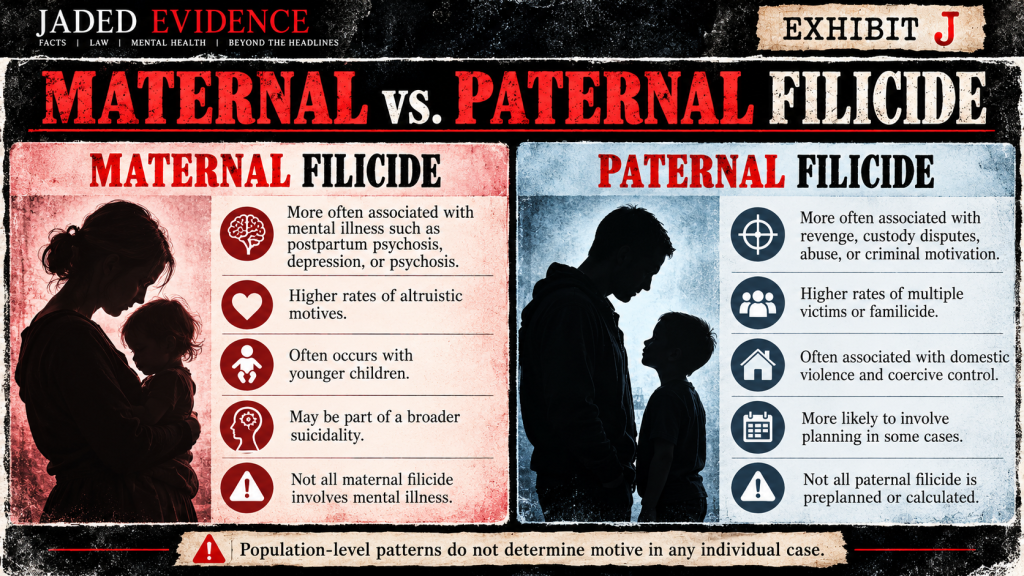
Maternal and paternal filicide
Research has identified differences as well as overlap in maternal and paternal filicide. Useful comparison points include victim age, prior domestic violence or maltreatment, suicide or attempted suicide after the killings, psychiatric history, relationship breakdown, custody conflict, and whether the event is part of a broader familicide. These are population-level patterns and should never be used to presume motive in an individual case.
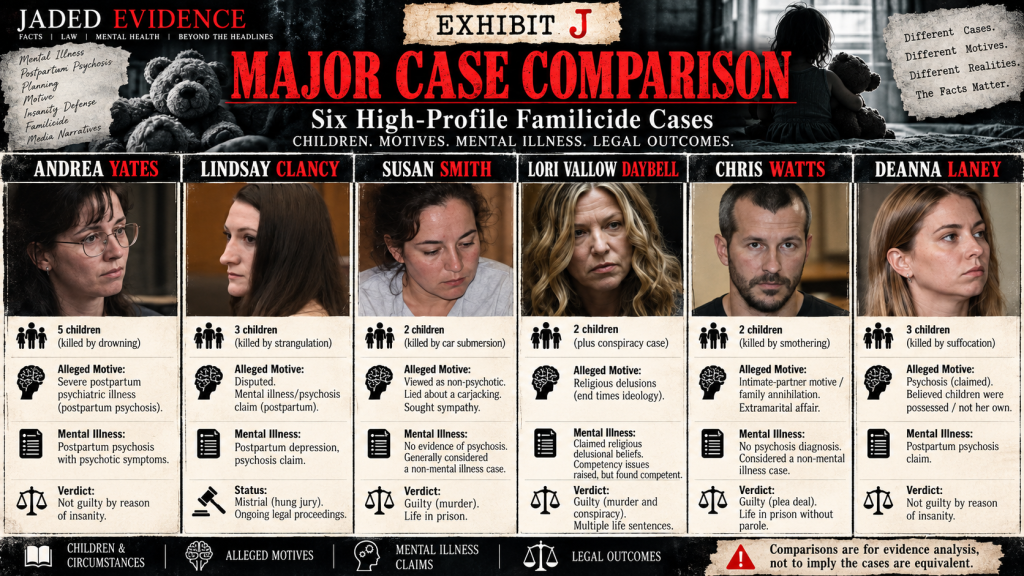
Cases we will compare
The point of comparing cases is not to declare them equivalent. It is to make their differences visible. Exhibit J will compare documented psychiatric evidence, prosecution theory, defense theory, planning and concealment evidence, statements, verdicts, sentences, and appellate history.
- Andrea Yates — postpartum psychiatric illness, insanity litigation, and a second-trial not-guilty-by-reason-of-insanity verdict. Read the case file →
- Lindsay Clancy — psychiatric evidence, medication and treatment history, competing interpretations of intent and criminal responsibility, and post-mistrial litigation. Read the case file →
- Susan Smith — intentional killing, false carjacking report, motive evidence, and a case that contrasts sharply with acute-psychosis models. Read the case file →
- Lori Vallow Daybell — multiple victims, conspiracy evidence, unusual religious beliefs, financial evidence, and questions about the distinction between bizarre beliefs and legal incapacity. Read the case file →
- Chris Watts — familicide, deception, concealment, guilty pleas, and a markedly different evidentiary profile. Read the case file →
- Deanna Laney — psychosis and an insanity verdict in Texas. Read the case file →
- Clinical Lens: Psychosis Is Not a Verdict — a companion explainer on psychosis, diagnosis, and legal responsibility.
- Additional historical and current cases — added only when reliable primary or high-quality secondary sources support the comparison.
The evidence matrix
Each featured case will be examined using the same framework: victims; date and jurisdiction; cause and manner of death; alleged or established motive; psychiatric history; diagnosis or claimed diagnosis; medications and treatment; suicidality; prosecution theory; defense theory; planning evidence; concealment evidence; contemporaneous statements; expert testimony; insanity standard; verdict; sentence; and appellate outcome.
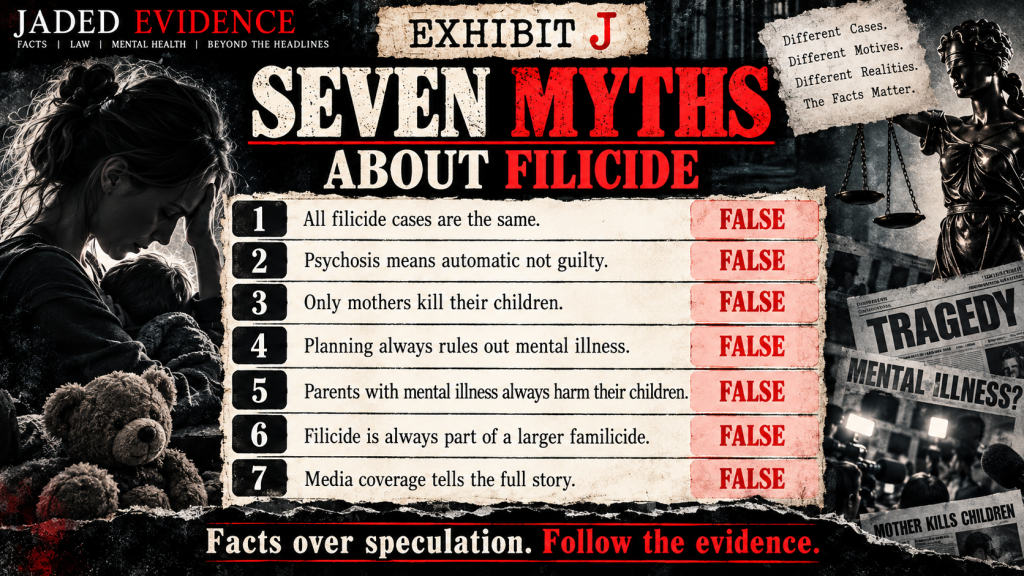
- “All parents who kill their children must be psychotic.”
- “If someone planned anything, they could not have been psychotic.”
- “A diagnosis automatically means legal insanity.”
- “Appearing calm proves a person knew exactly what they were doing.”
- “Suicide after filicide proves an altruistic motive.”
- “Mothers and fathers commit filicide for the same reasons.”
- “One famous case can explain another.”
Research foundation
- Resnick PJ. Child murder by parents: a psychiatric review of filicide. American Journal of Psychiatry. 1969. PMID: 5801251.
- Bourget D, Grace J, Whitehurst L. A review of maternal and paternal filicide. Journal of the American Academy of Psychiatry and the Law. 2007. PMID: 17389348.
- Pitt SE, Bale EM. Neonaticide, infanticide, and filicide: a review of the literature. Bulletin of the American Academy of Psychiatry and the Law. 1995. PMID: 8845528.
- Brockington I. Suicide and filicide in postpartum psychosis. Archives of Women’s Mental Health. 2017. PMID: 27778148.
- Karlsson LC, Antfolk J, Putkonen H, et al. Familicide: A Systematic Literature Review. Trauma, Violence & Abuse. 2021. PMID: 30704336.
- Shields LBE, Rolf CM, Goolsby ME, et al. Filicide-Suicide: Case Series and Review of the Literature. American Journal of Forensic Medicine & Pathology. 2015. PMID: 26087315.
Editorial standard
Jaded Evidence will distinguish established facts from allegations, psychiatric diagnoses from retrospective speculation, and clinical concepts from legal conclusions. Current defendants are presumed innocent unless and until proven guilty. Mental illness will not be used as a synonym for violence, and unusual beliefs will not be labeled delusions without adequate evidence.
Facts over speculation. Critical thinking. Follow the evidence.