
Active investigation · Philadelphia, Pennsylvania
The West Chew Avenue Investigation
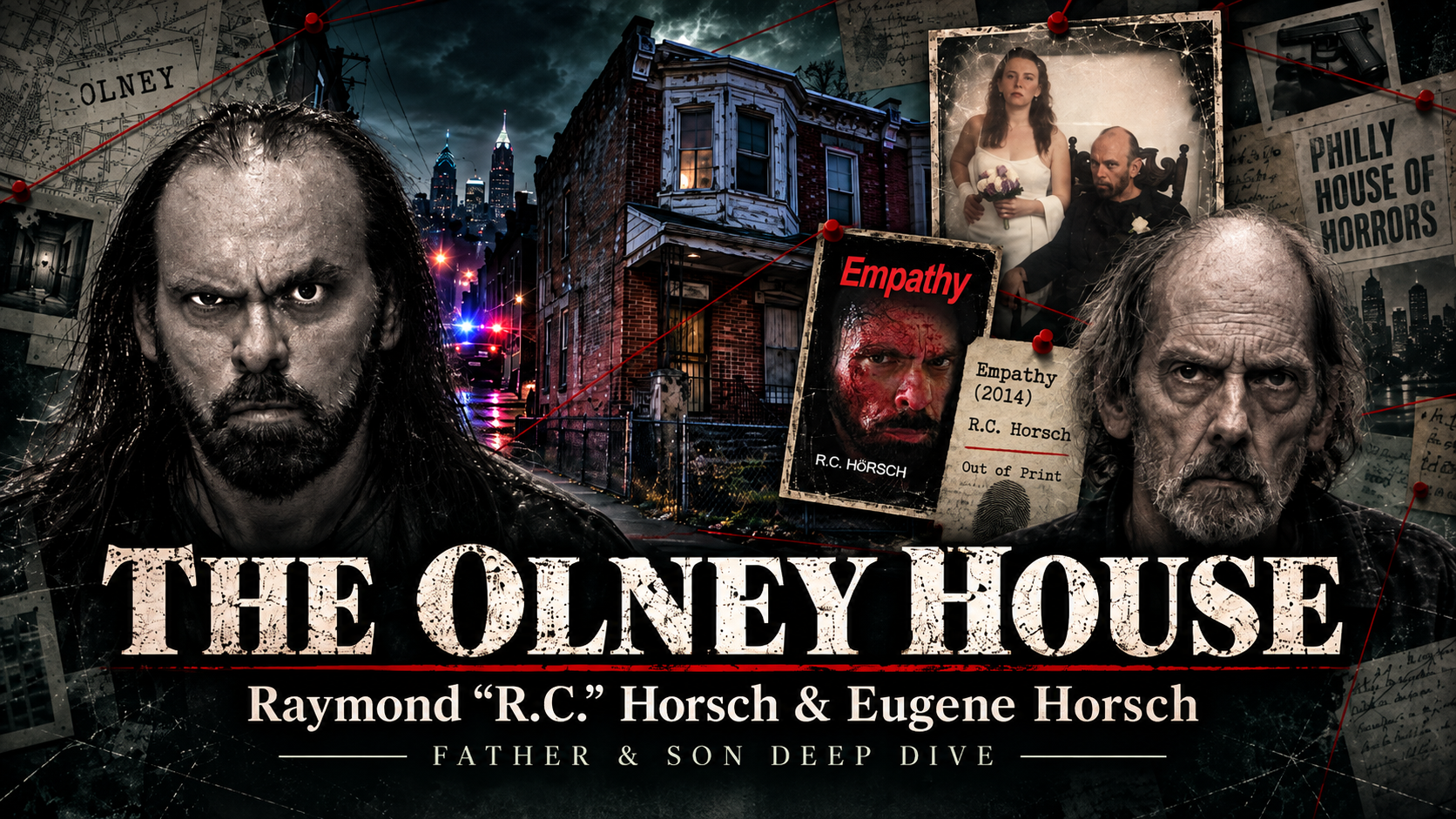
A Jaded Evidence deep dive into 417 West Chew Avenue, Raymond “R.C.” Horsch, Eugene Albert Horsch, the women linked to the property, the million-plus digital files under review, and the separate federal prosecution that grew out of the June 2026 traffic stop.
Research status: Active homicide/missing-person investigation · Separate federal case: trial March 22, 2027 · Court schedule verified October 7, 2026
Case snapshot
Status
Active homicide and missing-person investigation
Location
417 West Chew Avenue · Philadelphia, Pennsylvania
Central figures
Raymond “R.C.” Horsch · Eugene Albert Horsch
Evidence scale
More than one million digital files under review
Women linked publicly
Five described by police as appearing deceased; two additional women remain missing
Separate federal case
Eugene Horsch’s firearms and credential case is being tracked independently
Where the investigation stands
Philadelphia Police, assisted by the FBI, are reviewing evidence recovered from 417 West Chew Avenue in the Olney section of Philadelphia. By mid-September, investigators said they had identified 58 women in recovered images and videos. Police said five women depicted in the material appear to be deceased, while two additional women connected to the property remain missing. No human remains connected to those five women had been recovered as of the latest public update.
Critical distinction: Raymond “R.C.” Horsch died in 2025. Eugene Horsch has not been charged with homicide, kidnapping, or causing any woman’s disappearance. His current federal case involves firearms and allegedly fraudulent federal law-enforcement credentials. Jaded Evidence will keep the criminal prosecution and the missing-women investigation separated unless court records establish a direct connection.
October 2, 2026: Raymond Horsch Described as a “Suspected Serial Killer”
CBS Philadelphia reported that law-enforcement sources now consider the late Raymond “R.C.” Horsch a suspected serial killer as investigators continue reviewing digital evidence connected to the West Chew Avenue property. This is an attributed investigative characterization—not a conviction, formal homicide charge, or judicial finding. Horsch died in 2025 and therefore cannot be prosecuted. Investigators still must authenticate the recovered images and videos, identify the women depicted, corroborate apparent deaths, and determine which material was staged and which may document real violence.
How the case began
- June 19, 2026: A park ranger stopped Eugene Horsch near Independence Mall in Philadelphia. Investigators recovered firearms and identification materials that authorities said included fake federal credentials.
- A woman with Horsch allegedly presented identification in the name of Blair Tonzelli, who had been reported missing and was known to have been at the Chew Avenue property.
- The stop led investigators to 417 West Chew Avenue, where Eugene and his late father Raymond had lived.
- Police and federal agents recovered firearms, computers, hard drives, digital media, chemicals, urns, written material, and other evidence that expanded the investigation far beyond the original traffic stop.
Raymond “R.C.” Horsch
Raymond Horsch was a photographer, filmmaker, chemist and convicted offender who used the Chew Avenue property for years. Reporting based on court records and interviews describes a long history involving drugs, counterfeit activity, false identities, pornography, and violent imagery. Investigators are now trying to determine which material in his enormous archive was staged fantasy, which documented real abuse, and whether any files captured actual killings.
That distinction matters because Horsch reportedly mixed fictionalized violence with autobiographical material. A disturbing written or filmed scene is not, by itself, proof of a homicide. Investigators must authenticate the files, identify the people depicted, establish dates and locations, and corroborate what happened outside the images themselves.
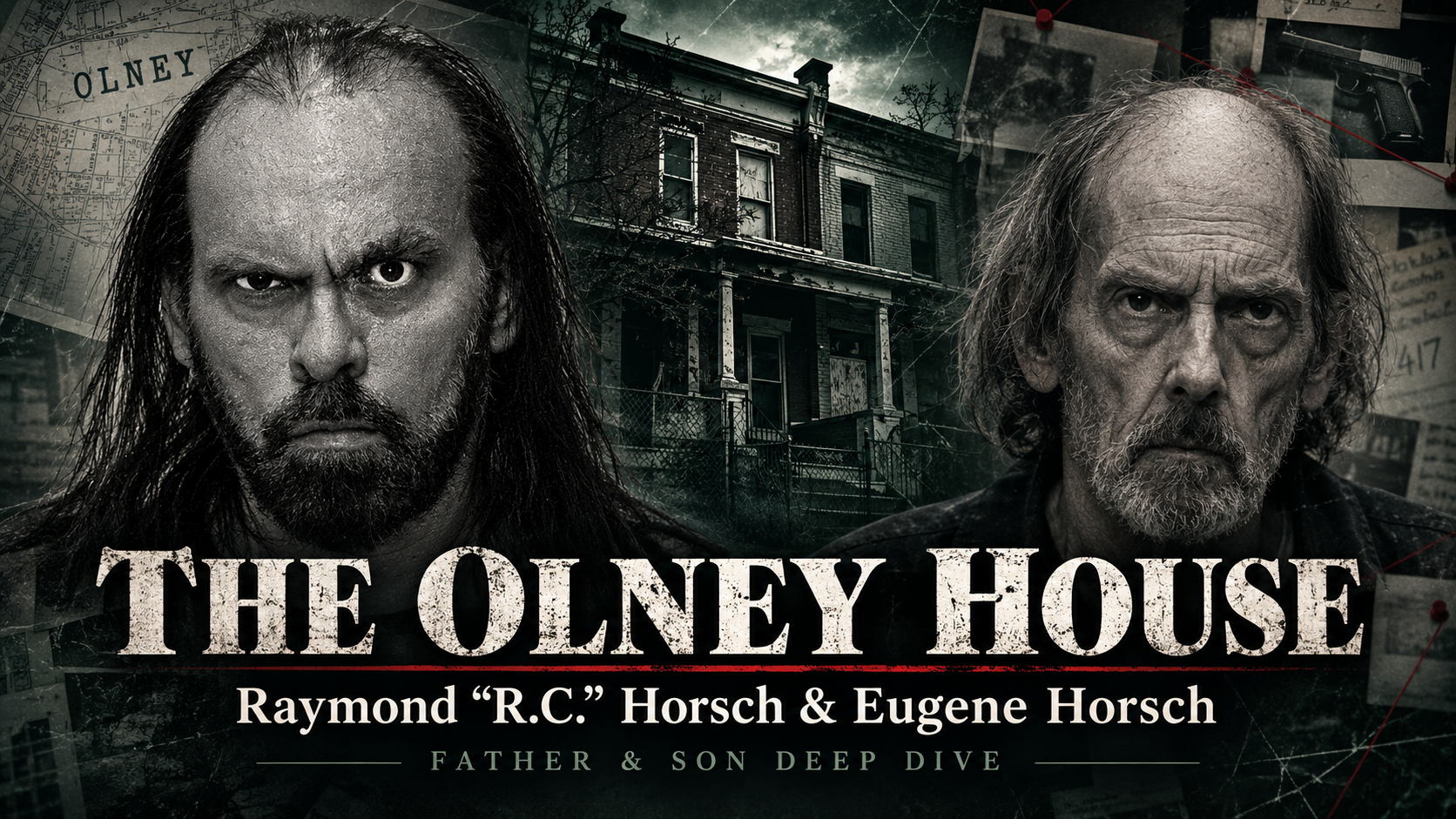
Father & Son: Raymond “R.C.” Horsch vs. Eugene Horsch
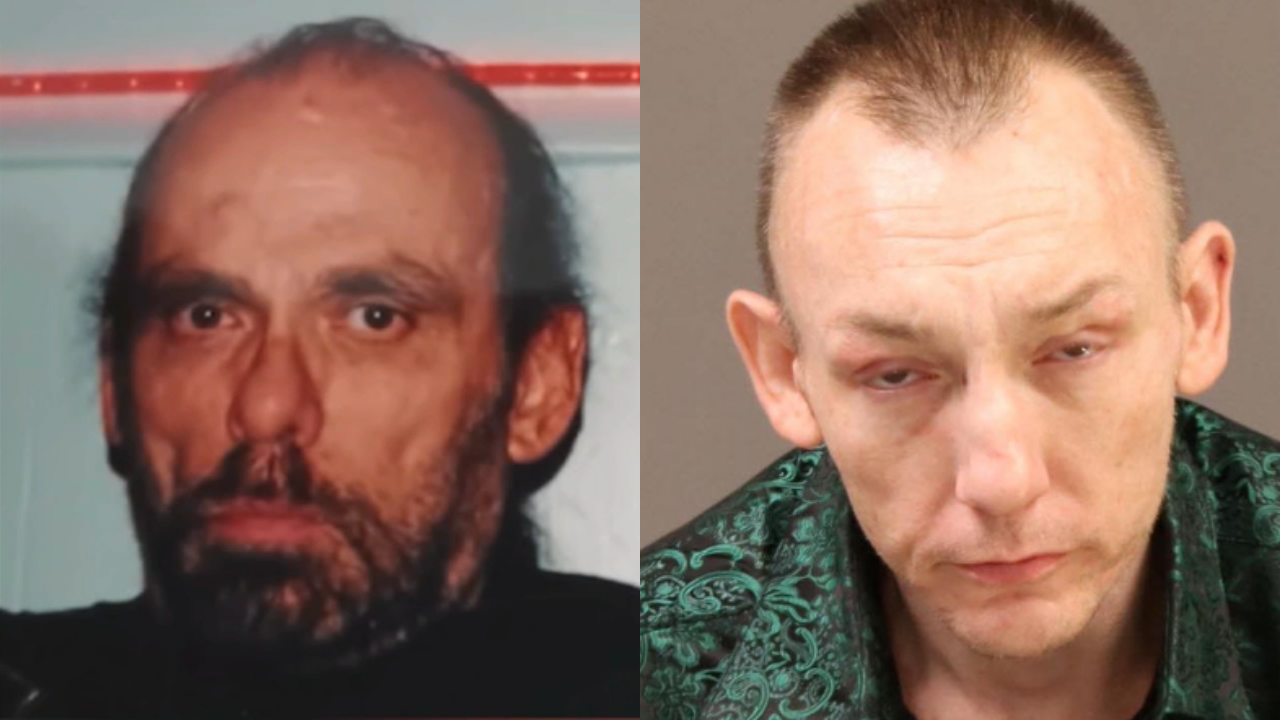
The Horsch investigation becomes much clearer when Raymond and Eugene are treated as separate evidentiary subjects. They shared the same property, a history of drug activity, and overlapping social circles, but the publicly disclosed evidence does not place them in the same category.
Bottom line: Raymond Horsch is the person investigators and law-enforcement sources increasingly connect to suspected killings and the violent digital archive. Eugene Horsch is the living defendant whose June 2026 arrest exposed the house and triggered the investigation, but he has not been charged with homicide, kidnapping, or causing any woman’s disappearance.
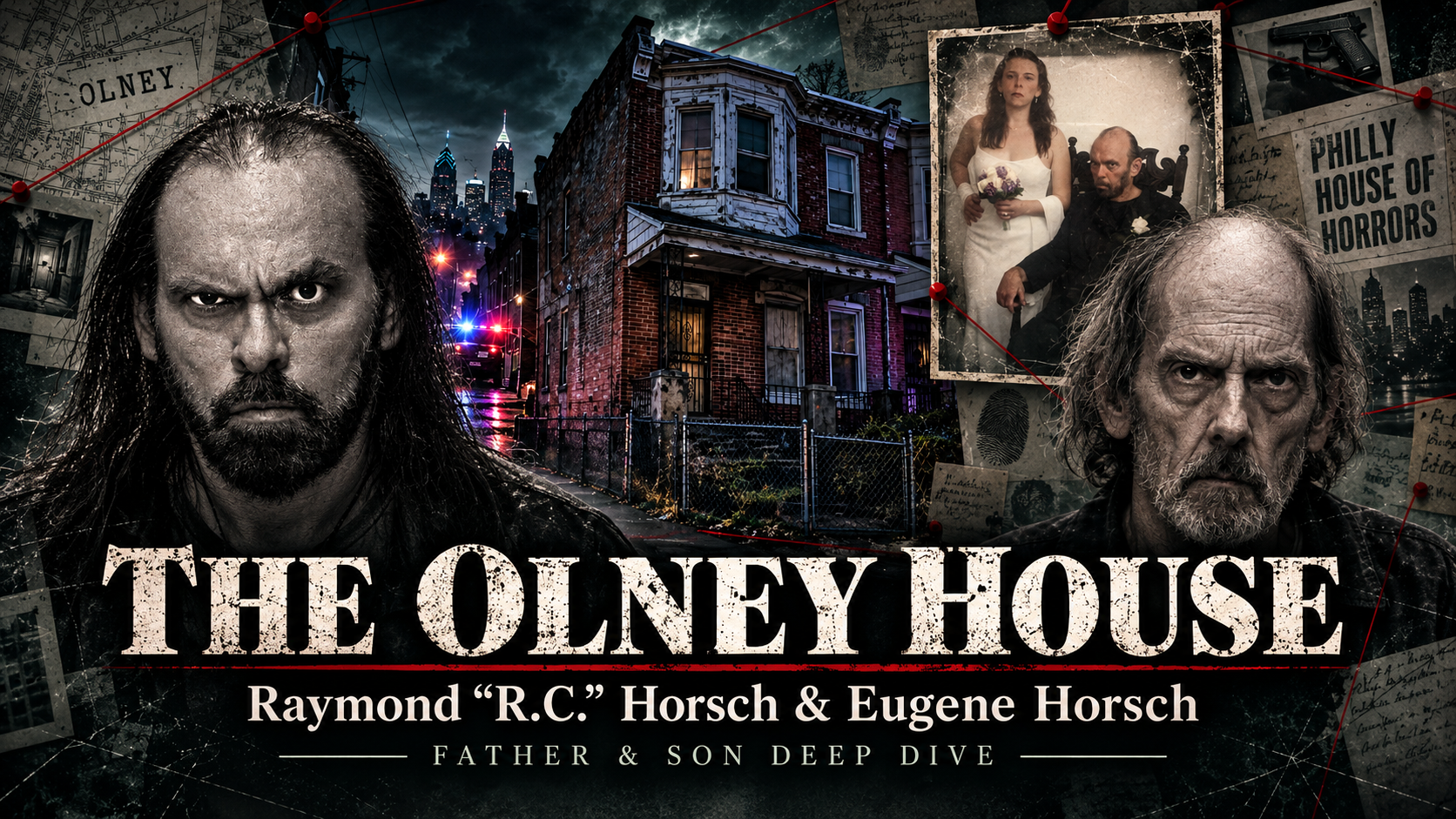
Raymond “R.C.” Horsch: the father
Raymond C. Hoersch, who later used the spelling Horsch, was born in 1943 and grew up in Pennsylvania. Reporting based on court records describes him as academically gifted, technologically capable, and drawn early to fraud, illicit chemistry, pornography, and fabricated identities. By the 1970s he had already accumulated a criminal record involving bad checks, counterfeiting, and drug manufacturing.
Counterfeiting and false identities
In 1974, federal authorities broke up a counterfeiting operation tied to Raymond in Bucks County. Investigators seized a large quantity of counterfeit $10 bills and false identification. In the late 1970s, after another federal drug case, Raymond fled the United States rather than face prosecution.
He eventually reached New Zealand using false identities, including the identity of a real chemist. Under an assumed name and with fabricated academic credentials, he obtained professional work involving alternative-fuel chemistry. Eugene was born in 1981 while Raymond was still a fugitive. Raymond was later caught with multiple false passports, fled again, and was ultimately captured in Florida and returned to Pennsylvania in 1985.
Drug manufacturing and chemistry
Raymond’s chemistry background was not merely theatrical. Federal authorities had previously accused him of operating a methamphetamine laboratory, and later drug cases again involved illicit manufacturing. In one later raid, authorities reported finding hundreds of marijuana plants, firearms, bondage equipment, violent imagery, and other disturbing material.
1985 psychological evaluation
A defense-retained psychological evaluation performed after Raymond’s capture described him as highly intelligent but grandiose, suspicious, controlling, and angry. The examiner wrote that he likely had bipolar and paranoid personality disorders and described longstanding hostility and emotional instability. That evaluation is historically relevant, but it should not be retroactively treated as proof that he committed later crimes or as a diagnosis explaining suspected homicides.
Violent sexualized media
The Guardian reported that Raymond had access to a crematorium connected to the former Garzone Funeral Home and used that access to photograph corpses. It also noted that his 2014 book Empathy includes a chapter involving the chemical dissolution of a murdered woman’s body. Neither fact proves a homicide, but both are relevant to why investigators are comparing his published fiction, photography, chemistry background, and the physical evidence recovered from West Chew Avenue.
Raymond spent decades creating erotic films, photographs, novels, and other works involving drug use, strangulation, drowning, simulated death, and serial-killer themes. He repeatedly blurred fiction and autobiography and cultivated a persona built around the idea of an “empathetic” or sexually deviant serial killer.
That deliberate blurring is now one of the hardest problems investigators face. A staged strangulation scene cannot simply be labeled a homicide because it is disturbing. Each file has to be authenticated and compared with missing-person records, metadata, witness accounts, and physical evidence from the house.
Women in addiction
Reporting indicates that Raymond regularly recruited women struggling with heroin or other substance-use disorders from Kensington to participate in his photography and films, often offering money, drugs, shelter, or access to the West Chew Avenue house. Several women known to have spent time with him later died of overdoses; others disappeared.
This is important because it gave Raymond repeated access to a highly vulnerable population whose disappearances or deaths could be more easily misclassified, delayed in reporting, or attributed to addiction.
The 2009 child-luring case
Raymond was arrested in 2009 after a nine-year-old girl reported that he tried to lure her toward his vehicle. He was initially convicted in Municipal Court of luring a child into a motor vehicle and corrupting the morals of a minor. He requested a new trial, and the prosecution ultimately collapsed after the child and her mother did not testify again. The charges were later dropped and the record was expunged.
The original conviction was therefore vacated and cannot fairly be described as a final standing conviction. The incident remains relevant because the original prosecutor and the now-adult complainant have publicly described the encounter, and because it broadens the documented history of concerning behavior beyond adult women.
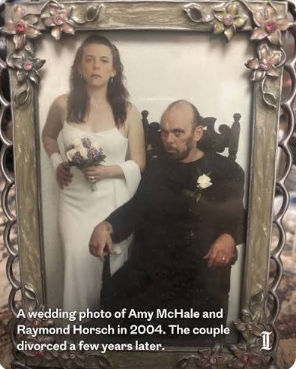
Amy McHale
Amy McHale, Raymond’s former wife and one-time collaborator, disappeared in June 2016. She was last known to have been at the Chew Avenue house. Her family has said they long suspected Raymond knew more about her disappearance than he admitted. No body has been recovered and Raymond was never charged in her disappearance.
Blair Tonzelli
Blair Tonzelli, who struggled with opioid addiction and spent time at the Chew Avenue property, disappeared in 2022 and was reported missing in 2023. Raymond had photographed her and displayed at least one troubling image of her on his website. She has not been publicly identified as one of the five women police say appear deceased in recovered media.
The suspected-killing evidence
The strongest public evidence tying Raymond to suspected homicide is digital. Police sources have said investigators recovered video they believe shows Raymond strangling a woman until she dies, along with additional images of women who appear alive and later deceased inside the Chew Avenue house. This is the evidence behind law-enforcement sources now describing Raymond as a suspected serial killer.
That characterization remains investigative rather than judicial. Raymond died in May 2025 at age 82 from lung-related illness and cannot be prosecuted. No court has adjudicated him guilty of the suspected killings.
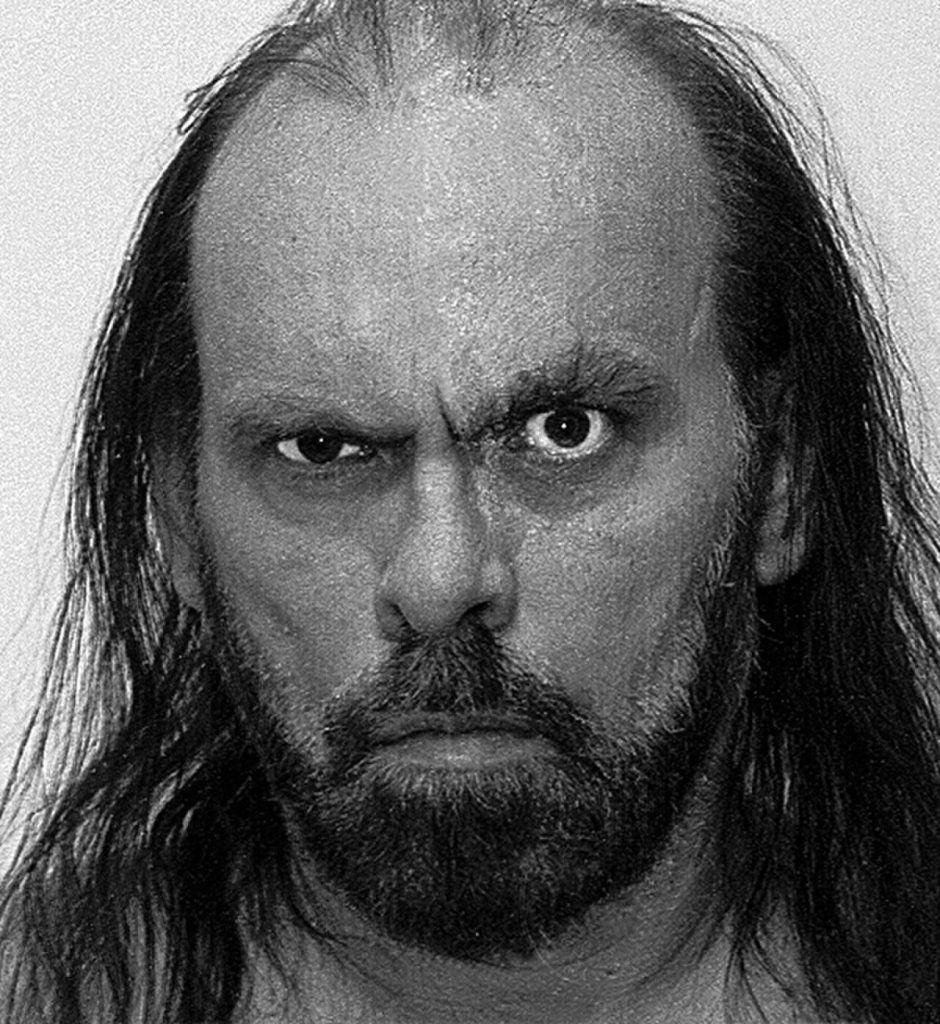
Eugene Albert Horsch: the son
Eugene was born in 1981 while his father was a fugitive overseas. He later lived with Raymond at 417 West Chew Avenue and eventually became the property owner. His criminal record is extensive, but it is materially different from the evidence now associated with Raymond.
Prior criminal history
Court-record reporting shows at least ten prior arrests involving drugs, alleged assaults, and drunken driving. In 2013, after authorities found a large marijuana operation at the Chew Avenue house, Eugene was sentenced to four to eight years in prison. The reported seizure was valued at approximately $1.9 million.
He was arrested again in May 2025 on marijuana and amphetamine-related charges and received probation. In March 2026, he was charged with aggravated assault after police alleged he stabbed a man in the abdomen near Eighth and Market Streets. Those charges were later withdrawn when a witness did not appear.
Reported violent behavior inside the house
Friends of Krista Killen told The Philadelphia Inquirer that Eugene could become violently aggressive while using drugs. They described one incident in which he allegedly broke through a basement door while armed and threatened Killen; according to their account, Raymond intervened and pulled Eugene away. This is witness reporting, not a conviction or proven finding.
The 2025 search
Police searched the Chew Avenue property after a fire in 2025 and reported finding a marijuana grow operation, mushrooms, methamphetamine, cash, firearms, and ammunition. Authorities said several of the weapons had obliterated serial numbers and that Eugene, because of his prior felony record, was prohibited from possessing firearms.
June 19, 2026: the arrest that exposed the case
The present investigation began after a U.S. park ranger encountered Eugene in a BMW near Independence Hall. Police records and subsequent reporting say investigators recovered drugs, weapons, a cattle prod, knives, two loaded guns, and false federal law-enforcement credentials.
The woman with Eugene presented identification bearing the name Blair Tonzelli. She later reportedly told investigators that Eugene had produced the false identification for her and that she did not know Tonzelli. That single detail connected Eugene’s arrest to a real missing woman who had been associated with the Chew Avenue house.
False federal credentials
Federal prosecutors allege Eugene possessed fraudulent DEA and FBI identification documents. One fake DEA credential reportedly carried his photograph under the name “Eugene Frederick Steiner.” Investigators also recovered a computer from the Chew Avenue property that prosecutors allege may have been used to create fraudulent credentials. The Guardian, citing court documents, also reported that Eugene allegedly said Blair Tonzelli would “never be seen again.” That statement has not been adjudicated and should be treated as an allegation, but it is highly relevant because the female passenger with Eugene reportedly possessed identification in Tonzelli’s name.
Current federal case
Eugene is federally charged with possession of firearms by a convicted felon and possession of unlawfully produced identification/authentication documents. Philadelphia prosecutors withdrew overlapping local charges as the federal case proceeded. He remains in federal custody, and his attorney has maintained his innocence.
The chemical-disposal allegation
Investigators have interviewed people who said Eugene claimed to know how chemicals could be used to break down human remains. One woman reportedly told police that he said he knew chemicals that could reduce a body enough to be disposed of through plumbing.
That allegation is highly significant but also highly limited. A statement about knowing how to dissolve remains is not proof that Eugene ever did so. Investigators would need physical, chemical, DNA, digital, or testimonial corroboration tying such a method to an actual victim.
Clinical Lens: What is “wet cremation”?
“Wet cremation” is the common name for alkaline hydrolysis, also called aquamation or resomation. In legitimate mortuary use, it is a regulated process performed in specialized equipment. Instead of burning tissue, the system uses water and strong alkaline compounds—most commonly potassium hydroxide (KOH) or sodium hydroxide (NaOH)—under controlled conditions to accelerate hydrolysis of soft tissue.
The soft tissues are converted into a water-based liquid containing small organic molecules and salts, while the mineral component of bone remains and is handled separately. Strong acids can also break down biological material, but acid dissolution is not what the funeral industry means by alkaline hydrolysis or wet cremation.
That distinction matters in the Olney House investigation. Public reporting about chemical containers, laboratory equipment, drainage alterations, drums, hoses, or plumbing does not establish that a functioning alkaline-hydrolysis system existed at the property. A legitimate commercial aquamation unit is purpose-built, engineered equipment. If investigators suspect an improvised chemical-processing setup, they would still need laboratory evidence showing what substances were present and what the equipment was actually used for.
From a forensic standpoint, investigators could examine chemical residues, abnormal pH patterns, corrosion or alteration of plumbing, material recovered from drains or traps, biological traces, mineral fragments, and residues inside containers or hoses. Those findings would require laboratory confirmation before they could support a conclusion that human remains were chemically processed.
Evidence boundary: Jaded Evidence is not asserting that investigators have proven chemical dissolution of a victim at 417 West Chew Avenue. The current significance is that the reported chemistry, containers, drainage modifications, and statements attributed to people connected with the property give investigators a reason to test that possibility.
Where the father and son overlap
- 417 West Chew Avenue: both men lived there, and Eugene eventually owned the property.
- Drug activity: both men had significant drug-related criminal histories.
- Firearms: weapons were repeatedly recovered in investigations involving the property.
- False identities: Raymond lived for years under fabricated identities; Eugene is now accused of possessing false federal credentials.
- Vulnerable women: both men interacted with women experiencing addiction and instability who spent time at the house.
- Blair Tonzelli: Raymond photographed her and she spent time at the home; years later, a woman arrested with Eugene possessed a false ID in Tonzelli’s name.
Where the evidence currently diverges
| Issue | Raymond | Eugene |
|---|---|---|
| Suspected killings | Police sources say recovered video/images appear to connect Raymond directly to deaths. | No homicide charge and no publicly disclosed video placing Eugene in a killing. |
| Missing women | Direct relationship to several women, including Amy McHale and Blair Tonzelli. | Connected through the house, Tonzelli’s false ID, and reported disputes/associations. |
| Violent media | Created extensive films, photography and writings centered on simulated violence and serial killers. | No comparable published body of violent media has been publicly documented. |
| Criminal history | Counterfeiting, false identities, drug manufacturing, fugitive history, later drug/gun cases. | Drug convictions, weapons allegations, assault-related arrests, DUI history, fake federal credentials. |
| Current legal exposure | None; died in 2025. | Active federal firearms and fraudulent-credential prosecution. |
The central unanswered father-son question
The largest unresolved issue is not whether both men had criminal histories — they did. It is whether Eugene knew what Raymond was doing, participated in any violence, helped conceal evidence, or simply lived amid a chaotic environment created over decades by his father.
At present, the public evidence does not answer that question. Shared residence, criminality, disturbing statements, and access to the same property create investigative relevance. They do not automatically establish complicity.
Jaded Evidence assessment
The public record currently supports treating Raymond as the principal suspected offender in the possible serial-homicide investigation and Eugene as a separate but important investigative subject whose arrest unlocked the case. Conflating them risks both overstating the case against Eugene and understating the specific evidence increasingly associated with Raymond.
The women linked to the property
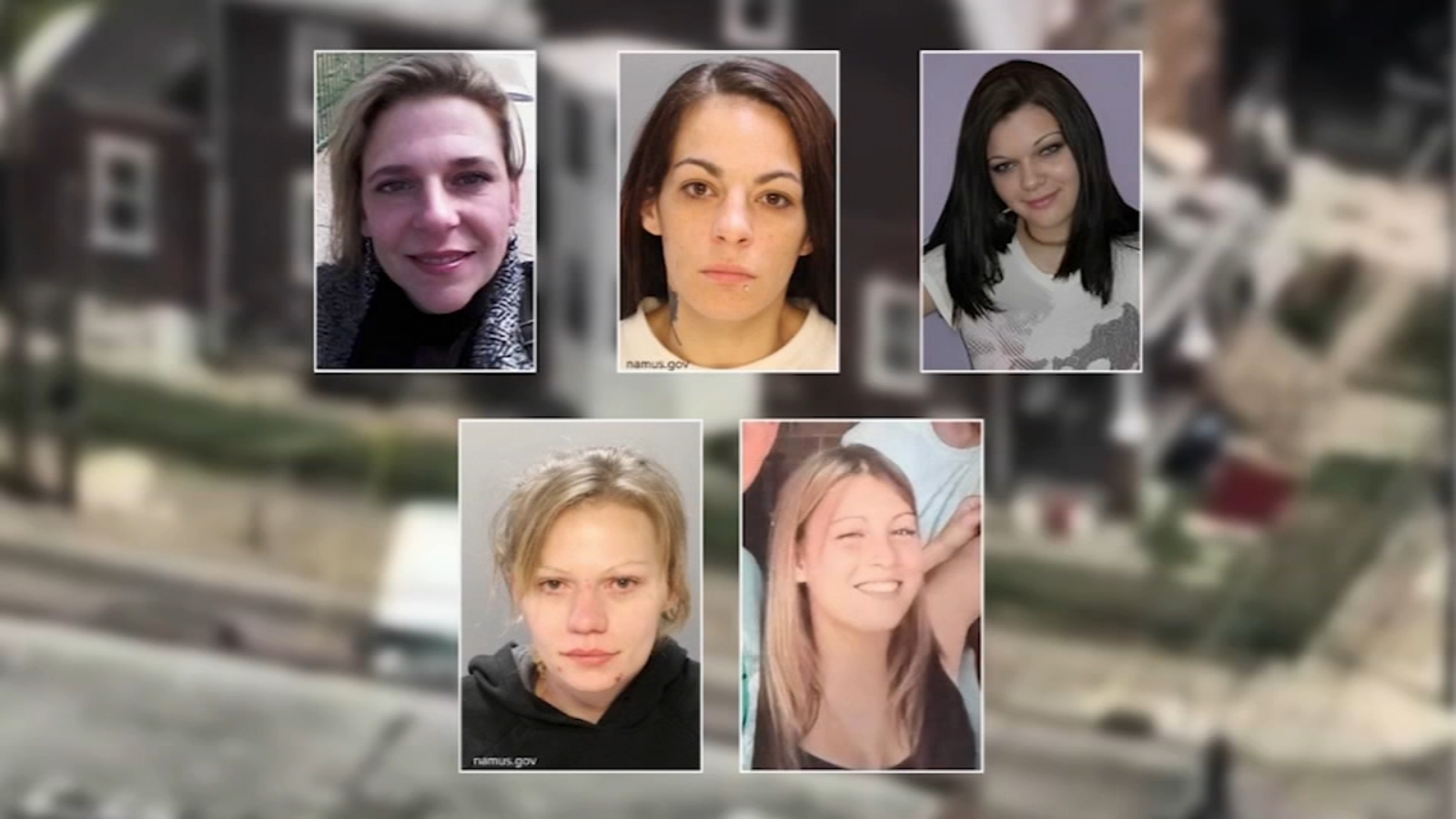
By September 16, police said seven dead or missing women were linked to the property. The Guardian reported on October 2 that investigators had identified 58 women appearing in recovered photographs or film. Of those, 25 had reportedly been located but not yet interviewed, while 19 had spoken with detectives but declined to cooperate. That leaves investigators with a large group of women whose experiences may still help distinguish staged material from real violence. Public reporting and police statements identify or describe the following:
- Maribel “Bella” Fresses — reported missing in 2018; police say recovered digital material depicts her alive and later apparently deceased.
- Gabrielle Amarando — missing since 2012; police say recovered images depict her alive and later apparently deceased.
- Nicole Fusaro — reported missing in 2018; investigators say recovered video appears to depict Raymond Horsch strangling her until she became unconscious. Police believe she died at the property.
- An identified 25-year-old woman whose name is being withheld at her family’s request — investigators say images show her unconscious with visible injuries and later apparently deceased.
- Jane Doe — an unidentified woman, believed to have been in her mid-20s, depicted in recovered material and appearing to be deceased.
- Blair Tonzelli — reported missing in 2023 and connected to the Chew Avenue property; no public finding has established that she is one of the five women depicted as deceased.
- Amy McHale — Raymond Horsch’s former wife, last known to have been connected to the property in 2016; she remains missing.
The digital evidence problem
The Guardian reported that investigators believe at least some of the archive is staged and some may depict real violence. That distinction is why the case remains methodical rather than sensational: photographs showing an apparently unconscious or lifeless woman cannot substitute for victim identification, metadata, corroborating witness testimony, or physical evidence.
The scale of the evidence is one of the defining features of this investigation. Police and FBI personnel are working through more than one million photographs, videos and other digital files. Investigators must identify people, verify timestamps and metadata, distinguish staged scenes from real violence, compare images to missing-person records, and determine whether any apparent death can be independently corroborated.
Without remains, a medical examiner cannot perform an autopsy or conclusively determine cause and manner of death. Philadelphia officials have said the medical examiner reviewed some of the recovered imagery and advised that, if authentic and unaltered, the women depicted appear to be deceased. That assessment is significant, but it is not the same thing as a completed homicide autopsy.
Searches and excavation
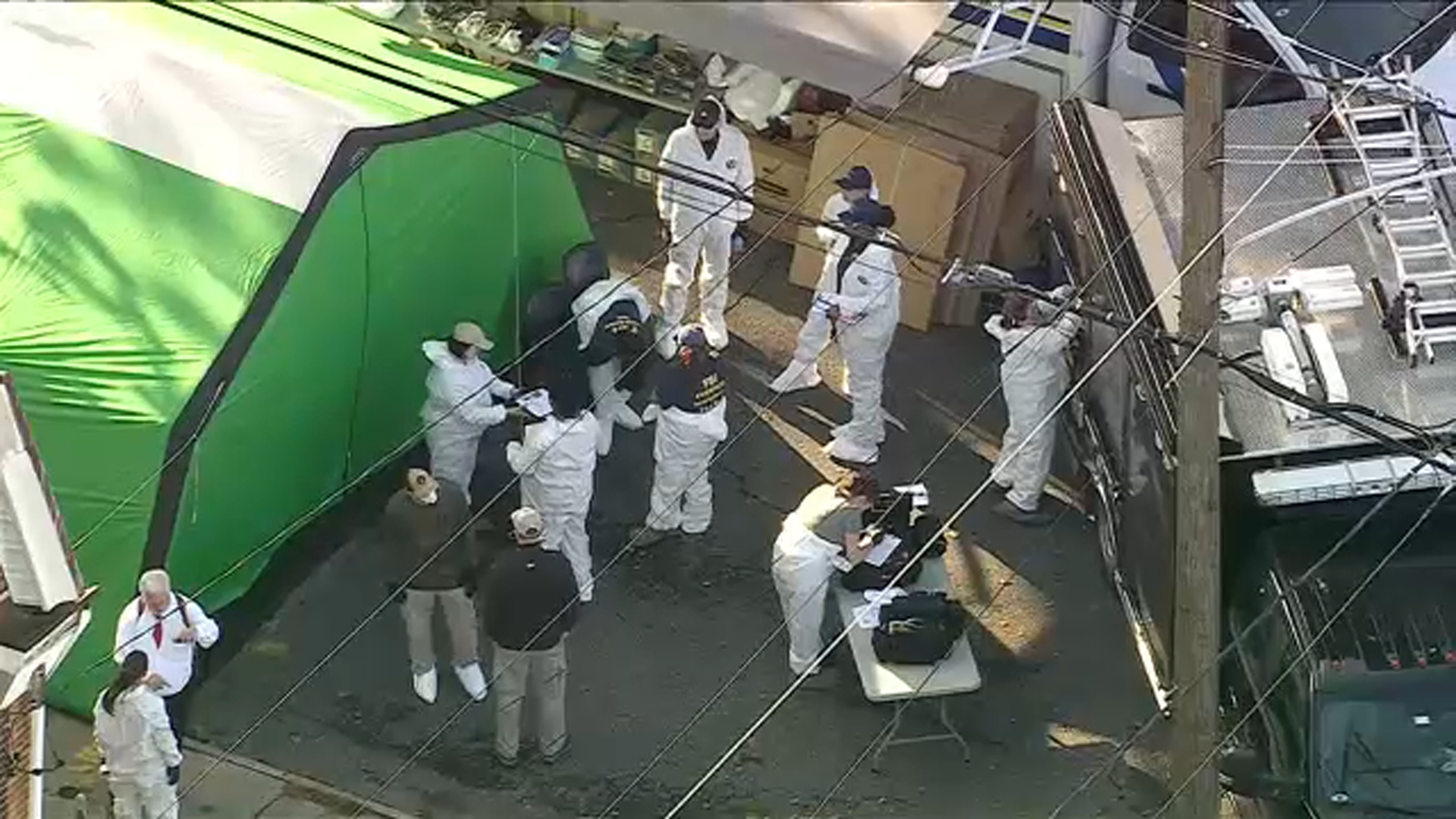
October 6 update — day two: The renewed forensic search continued through a second day. FOX 29 reports investigators removed items including a large television and a section of wall while FBI personnel and Philadelphia police in protective gear focused on potential DNA evidence. No human remains, new victim identification, homicide charge, or completed forensic conclusion has been announced. October 5–6: The renewed forensic-search phase began October 5 and continued October 6. FBI personnel and Philadelphia police were seen working inside the residence and removing evidence to a large processing tent outside. Temporary no-parking restrictions begin October 5 and are scheduled through October 19. Investigators are expected to work floor by floor and may remove floorboards, walls, drywall and other structural material while also examining exterior areas for physical or DNA evidence identified through the digital review.
Investigators repeatedly searched the home and grounds, including excavation work around the property and underground infrastructure. In late September and early October, Philadelphia Police and FBI personnel began a more intensive structural examination of 417 West Chew Avenue, removing portions of the deteriorated building to reach concealed or inaccessible areas. Authorities indicated that the methodical search could continue through October. The expanded search does not establish that human remains are present; it is an evidence-recovery effort within an active investigation. Earlier reports that a large quantity of possible blood had been discovered were later undercut by forensic testing that found the suspected material was not blood and did not identify DNA from the then-publicly known missing women. The investigation entered a new forensic phase on September 28, when Philadelphia police and FBI personnel returned to the property for extensive 3D documentation and scene preparation. Investigators are expected to remove and examine portions of flooring, drywall and plaster, guided by evidence identified during review of more than one million images and videos; multi-agency forensic processing is scheduled for October 5–16 and the search may continue through October.
Eugene Horsch’s separate federal case
Eugene Albert Horsch was federally indicted in July 2026 on charges alleging unlawful firearm possession by a convicted felon and possession of fraudulent identification documents purporting to come from federal law-enforcement agencies. Philadelphia prosecutors later withdrew overlapping local gun charges as the federal case moved forward.
The September 29, 2026 Third Amended Scheduling Order (Document 28) in United States v. Eugene Albert Horsch, No. 26-cr-296-JMY-1, sets trial for March 22, 2027, at 9:30 a.m. Eastern. The motions hearing is set for January 5, 2027, at 10:00 a.m. Eastern, replacing the November 3 date previously reported on this page. October 1 reporting placed Eugene in custody at FDC Philadelphia; the scheduling order does not independently confirm his current custody status. That proceeding concerns the separate firearms and fraudulent-credential prosecution; it should not be treated as a homicide or missing-person hearing. His attorney has said Eugene did not know what was stored in the basement and has attributed writings referencing serial killers to Raymond Horsch.
Evidence & records tracker
- Digital archive: photographs, videos, storage devices, metadata and file chronology.
- Missing-person identification: matching individuals in recovered media to known missing-person records.
- Physical and forensic searches: excavation activity, property searches, laboratory testing and any future recovery of remains.
- Medical-examiner review: what can and cannot be concluded from imagery in the absence of recovered remains.
- Federal case records: Eugene Horsch’s indictment, detention status, motions and March 2027 trial setting.
- Source priority: police releases, federal filings, court orders and attributable reporting are separated from rumor or social-media claims.
Federal court schedule: verified October 7, 2026
Judge John Milton Younge’s September 29, 2026 Third Amended Scheduling Order controls the schedule recorded below. These dates concern Eugene Horsch’s separate federal firearms and fraudulent-credential prosecution.
| Date / time (Eastern) | Event | Order details |
|---|---|---|
| December 7, 2026 | Pretrial motions due | All motions in limine, motions to suppress evidence, and Starks or Daubert motions (¶2). |
| December 14, 2026 | Responses due | Responses to those pretrial motions (¶2). |
| January 5, 2027, 10:00 a.m. | Motions hearing | Hearing on motions in limine, motions to suppress, and Starks or Daubert motions (¶5). |
| February 22, 2027 | Pretrial filings due | Pretrial memorandum, proposed jury instructions, verdict slip, voir dire, witness list, and exhibit list (¶3). |
| March 2, 2027 (calculated) | Expert summaries due, if applicable | Written summary of opinions, their bases and reasons, and witness qualifications delivered to the opposing party no later than 20 days before trial (¶4). |
| March 8, 2027 (calculated) | Trial-continuance motions due | No later than 14 days before trial. Later applications will not be entertained absent exceptional circumstances (¶6). |
| March 22, 2027, 9:30 a.m. | Trial scheduled | Courtroom 15B, 15th Floor, United States Courthouse, 601 Market Street, Philadelphia (¶1). |
The motions hearing also takes place in Courtroom 15B at 601 Market Street. March 2 and March 8 are calculated calendar dates based on the order’s 20-day and 14-day provisions and the March 22 trial setting; those calendar dates are not printed in the order. The expert-summary requirement applies if a party intends to call an expert witness.
Read the Third Amended Scheduling Order (PDF) — Document 28, filed September 29, 2026, pp. 1–2.
Key timeline
- 2012: Gabrielle Amarando disappears.
- 2016: Amy McHale is last known to have been connected to the Chew Avenue property.
- 2018: Maribel Fresses and Nicole Fusaro are reported missing.
- 2023: Blair Tonzelli is reported missing.
- 2025: Raymond “R.C.” Horsch dies.
- June 19, 2026: Eugene Horsch is stopped near Independence Mall; the encounter launches the investigation that leads to West Chew Avenue.
- June–July 2026: Philadelphia Police and federal agents repeatedly search the home and begin processing extensive digital and physical evidence.
- July 9, 2026: Eugene Horsch is federally indicted on firearms and fraudulent-credential charges.
- July 2026: Excavation and forensic searches are conducted at the property. Testing later reports no confirmed blood or missing-woman DNA from the material then examined.
- September 16–17, 2026: Police announce that five women depicted in recovered material appear deceased and that seven dead or missing women are linked to the property.
- September 22, 2026: Eugene Horsch’s federal trial is delayed until March 2027.
- September 28, 2026: Philadelphia police and FBI personnel return to 417 West Chew Avenue and begin a new forensic phase, including extensive 3D documentation and preparation for a deeper structural search.
- September 29, 2026: Reporting indicates investigators plan to remove and examine floorboards, sections of walls, drywall and plaster while cataloging potential evidence identified through the digital archive.
- October 5–16, 2026: Multi-agency forensic processing is scheduled to intensify, with heavy equipment expected and investigators prepared to dismantle portions of the interior. The search may continue through October.
What still needs to be established
- Can investigators authenticate every image or video believed to depict a death?
- Who is the unidentified Jane Doe?
- Where are the remains of the women police believe are deceased?
- What happened to Blair Tonzelli and Amy McHale?
- Which acts depicted in Raymond Horsch’s archive were staged, and which were real?
- Can metadata, financial records, phones, vehicles, witness statements or location data establish a complete chronology?
- Will any living person ultimately face charges connected to the missing women?
October 5 forensic-processing update
Investigators returned to 417 West Chew Avenue for an intensive forensic examination scheduled for October 5. Philadelphia police and FBI personnel had already begun 3D-documenting the property. Reporting indicates investigators planned to remove and examine portions of flooring, drywall and plaster, guided by what they observed while reviewing more than one million recovered images and videos.
The evidentiary distinction remains critical: Eugene Horsch owns the property and remains in federal custody on unrelated firearm and drug allegations, but he has not been charged with homicide or with causing the disappearances under investigation. Much of the disturbing recovered material has been linked in reporting to his late father, Raymond “R.C.” Horsch. Jaded Evidence will keep those two evidentiary tracks separate unless investigators establish a connection.
Police have publicly said 58 women depicted in recovered material have been identified; five are feared dead, and two additional women known to frequent the property have been missing for years. Earlier reports of a significant amount of blood inside the house were later revised after forensic testing indicated the suspected substance was not blood and did not yield DNA from the missing women then under examination.
CBS Philadelphia — forensic processing update · CBS Philadelphia — 58 women identified
Deep dive: the Horsch case is really three investigations
The West Chew Avenue case is easier to understand if it is separated into three evidentiary tracks. First is the missing-women investigation: investigators are trying to determine what happened to women known to have visited or been depicted at 417 West Chew Avenue. Second is the forensic archive investigation: more than one million digital files must be authenticated, dated, geolocated, and matched to real people. Third is the Eugene Horsch federal prosecution, which currently concerns firearms and fraudulent federal credentials rather than homicide.
Track 1: the missing women
The known names should not be treated as one undifferentiated list. Police have described different evidentiary relationships to the house:
- Gabrielle Amarando — missing since 2012. Police say recovered media depicts her alive and later apparently deceased.
- Maribel “Bella” Fresses — missing since 2018. Police say recovered media depicts her alive and later apparently deceased.
- Nicole Fusaro — missing since 2018. Investigators say video depicts Raymond Horsch restraining and strangling her until she loses consciousness; police believe she died.
- Amy McHale — Raymond Horsch’s former wife, missing since 2016 and last linked publicly to the Chew Avenue property. She has not been identified as one of the five women police say appear deceased in recovered media.
- Blair Tonzelli — reported missing in 2023. The June traffic stop became especially significant because Eugene Horsch’s passenger allegedly possessed identification in Tonzelli’s name. Police have not publicly established that Tonzelli is one of the women depicted as deceased.
- Two additional women — investigators have described one identified 25-year-old woman whose name is being withheld at her family’s request and one unidentified Jane Doe as appearing deceased in recovered material.
Track 2: what the archive can prove — and what it cannot
The central forensic problem is that Raymond Horsch deliberately blurred staged violence, pornography, autobiographical claims, and fiction. Police therefore cannot assume that a horrifying image documents a real crime. They have to establish who is depicted, whether the file is original, where and when it was recorded, whether the sequence is continuous, and whether another source corroborates injury or death.
By August, investigators said they had reviewed only roughly 5% to 7% of hundreds of thousands of images and tens of thousands of videos. By mid-September they had identified 58 women in the material, while continuing efforts to locate and interview others. This is why the investigation has expanded instead of narrowing: identification creates new witness interviews, missing-person comparisons, devices to examine, and locations to verify.
The crematorium connection
One of the most consequential background findings is Raymond Horsch’s reported access years ago to a Kensington crematorium associated with the former Garzone Funeral Home operation. The Philadelphia Inquirer reported that Horsch had photographed and filmed human remains there and that people familiar with him said he obtained access through an employee in exchange for drugs and money. The Garzone operation itself had previously been implicated in an illegal body-parts scheme.
This history does not prove that any urn recovered from West Chew Avenue contains a missing woman or that Horsch used the crematorium to dispose of a homicide victim. It does, however, give investigators a legitimate reason to examine the provenance of the five urns recovered from the house and to distinguish legitimately acquired human remains from evidence connected to a crime.
The June traffic stop: the hinge point
The current investigation did not begin with a body or a homicide report. It began with a June 19 encounter near 6th and Market Streets. According to reporting based on court records and investigators, a park ranger noticed Eugene Horsch and a female passenger, heard the woman say words to the effect of “you’re going to hurt me,” and the subsequent search allegedly produced drugs, two handguns, and false federal credentials. The passenger reportedly possessed identification in Blair Tonzelli’s name.
That combination triggered the search-warrant chain that led investigators back to 417 West Chew Avenue. The traffic stop is therefore the investigative hinge: without it, the digital archive and the current missing-women investigation may not have been uncovered when they were.
Why the basement and plumbing matter
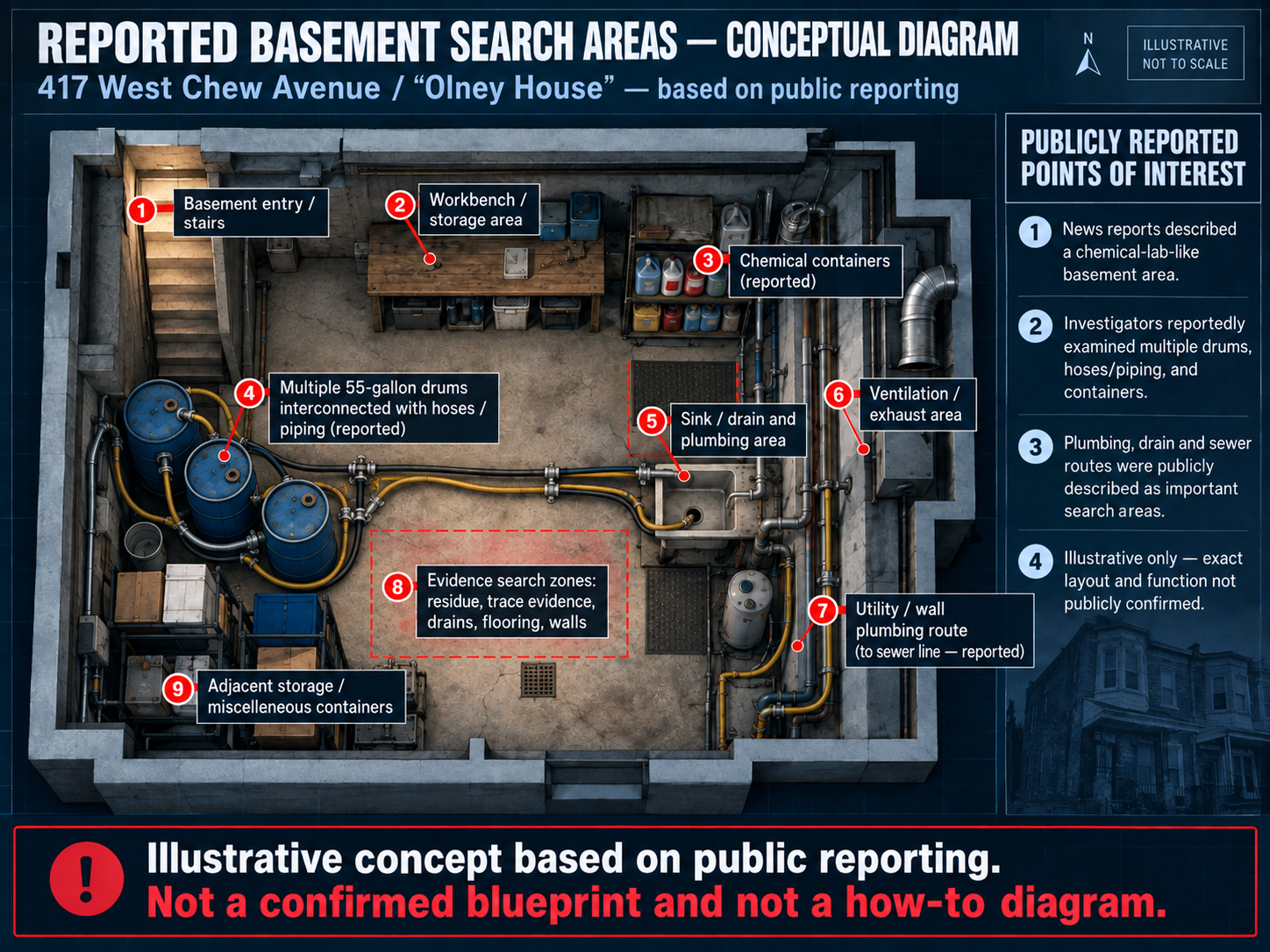
Earlier searches documented a chemical laboratory, a 55-gallon drum connected to hoses or piping, and numerous containers of unidentified substances. In July, investigators excavated plumbing around the property. In October, the FBI and Philadelphia Police shifted to a floor-by-floor forensic examination looking for blood, tissue, hair, fibers, and other trace evidence in furniture, flooring, drywall, and concealed spaces.
The evidentiary logic is straightforward: if digital evidence suggests violence occurred in a specific room or position, scene analysts can use architecture, camera angles, stains, plumbing pathways, and trace material to test whether the imagery corresponds to the physical house. A positive DNA association could materially strengthen a homicide theory; a negative result does not automatically disprove one, especially after years of cleaning, remodeling, decomposition, or chemical exposure.
October 5–6: the forensic search enters its most destructive phase
On October 5, FBI and Philadelphia Police investigators returned to the property and began the intensive interior forensic phase. CBS Philadelphia reported that the search is proceeding floor by floor and that investigators are prepared to remove furniture, flooring, drywall, or other material if it may contain blood, tissue, hair, fibers, or other trace evidence. Heavy equipment is expected as the search expands to additional excavation around the property.
This is important because the current search is no longer a general exploratory dig. Investigators are now using information learned from months of digital review to target specific parts of the structure. That makes the digital archive and the physical scene mutually informative: images tell investigators where to look, and the scene may validate or contradict what the images appear to show.
The missing-person-system question
The case also raises a separate institutional question: why did multiple disappearances linked to the same address or the same man not converge earlier? CBS Philadelphia has reported that the investigation has prompted scrutiny of how missing-person reports were handled. That does not mean investigators previously had enough evidence to identify a serial pattern. It does mean the historical files should now be compared for shared addresses, phone numbers, associates, arrests, vehicles, social-media contacts, and prior police calls.
What would materially change the case
- A DNA match connecting a missing woman to blood, tissue, hair, or remains recovered from the house.
- Authentication of a continuous video sequence showing a victim alive, an assault, death, and postmortem handling.
- Recovery and identification of human remains.
- Metadata establishing exact dates and tying an image or video to a victim’s known disappearance window.
- Witness testimony corroborating who was present during violent recordings.
- Evidence establishing who created, controlled, or knowingly preserved specific files.
- Records explaining the origin and identity of the cremated remains in the recovered urns.
What should not be overstated
Raymond Horsch is now being described by law-enforcement sources as a suspected serial killer, but he was never convicted of these suspected homicides and died before the current investigation developed. Eugene Horsch owns the property and is federally charged in the separate firearms/credential case, but he has not been charged with killing or kidnapping any of the women. The evidence may ultimately implicate one person, multiple people, or no living person in some of the disappearances. The distinction between suspicion, forensic evidence, criminal charge, and proven fact remains essential.
October 7, 2026: Day 3 of the renewed forensic search
Plumbing detail: CBS reports two clogged sewer laterals removed in July were sent for testing; contents remain unknown. Over 100 warrants remain sealed. Source.
Investigators continued dismantling portions of 417 West Chew Avenue on October 7 as Philadelphia Police and FBI personnel searched for DNA and other physical evidence that could place at least five women inside the house. CBS Philadelphia reported that household items, boxes and other evidence have been removed during the current phase. Photographs from the search also show investigators removing packaged evidence including glass vials, a vacuum cleaner and exercise equipment. The significance of those items has not been publicly established; their removal should not be interpreted as proof that any item was used in a crime.
What matters now: the search has moved beyond digital review into targeted physical corroboration. Investigators are looking for biological or trace evidence that can connect identified women to specific areas or objects in the house and help distinguish staged imagery from evidence of actual violence.
Selected sources
- U.S. District Court, Eastern District of Pennsylvania — United States v. Eugene Albert Horsch, No. 26-cr-296-JMY-1: Third Amended Scheduling Order, Document 28, filed September 29, 2026 (2 pages). Primary source for trial, motions, hearing, pretrial filings, expert-summary and continuance deadlines; scheduling verified October 7, 2026.
- The Philadelphia Inquirer — Raymond Horsch’s reported access to a Kensington crematorium
- CBS Philadelphia — how the June traffic stop led investigators to West Chew Avenue
- CBS Philadelphia — October 5 floor-by-floor forensic search
- Philadelphia Police Department — September 17, 2026 West Chew Avenue update
- The Philadelphia Inquirer — September 16 investigation update
- The Philadelphia Inquirer — investigative timeline
- NBC10 Philadelphia — Eugene Horsch federal trial delay
- NBC10 Philadelphia — renewed forensic examination and October 5–16 processing schedule
- CBS Philadelphia — investigators preparing to remove flooring, drywall and plaster
- 6abc Philadelphia — structural search may continue through October
- 6abc Philadelphia — October 2 update on the next extensive search phase and October 5–19 neighborhood restrictions
- The Philadelphia Inquirer — federal indictment
Editorial note: This is an active investigation. Jaded Evidence distinguishes confirmed police statements, criminal charges, reported evidence, witness accounts, and unresolved allegations. Eugene Horsch is presumed innocent of the federal charges unless and until proven guilty, and he has not been charged with any homicide or disappearance connected to the West Chew Avenue investigation.