
CONTENT NOTE: This article discusses healthcare-associated homicide, poisoning, suffocation, and vulnerable patients.
Facts over speculation. Follow the evidence.
Murders Inside Healthcare Settings
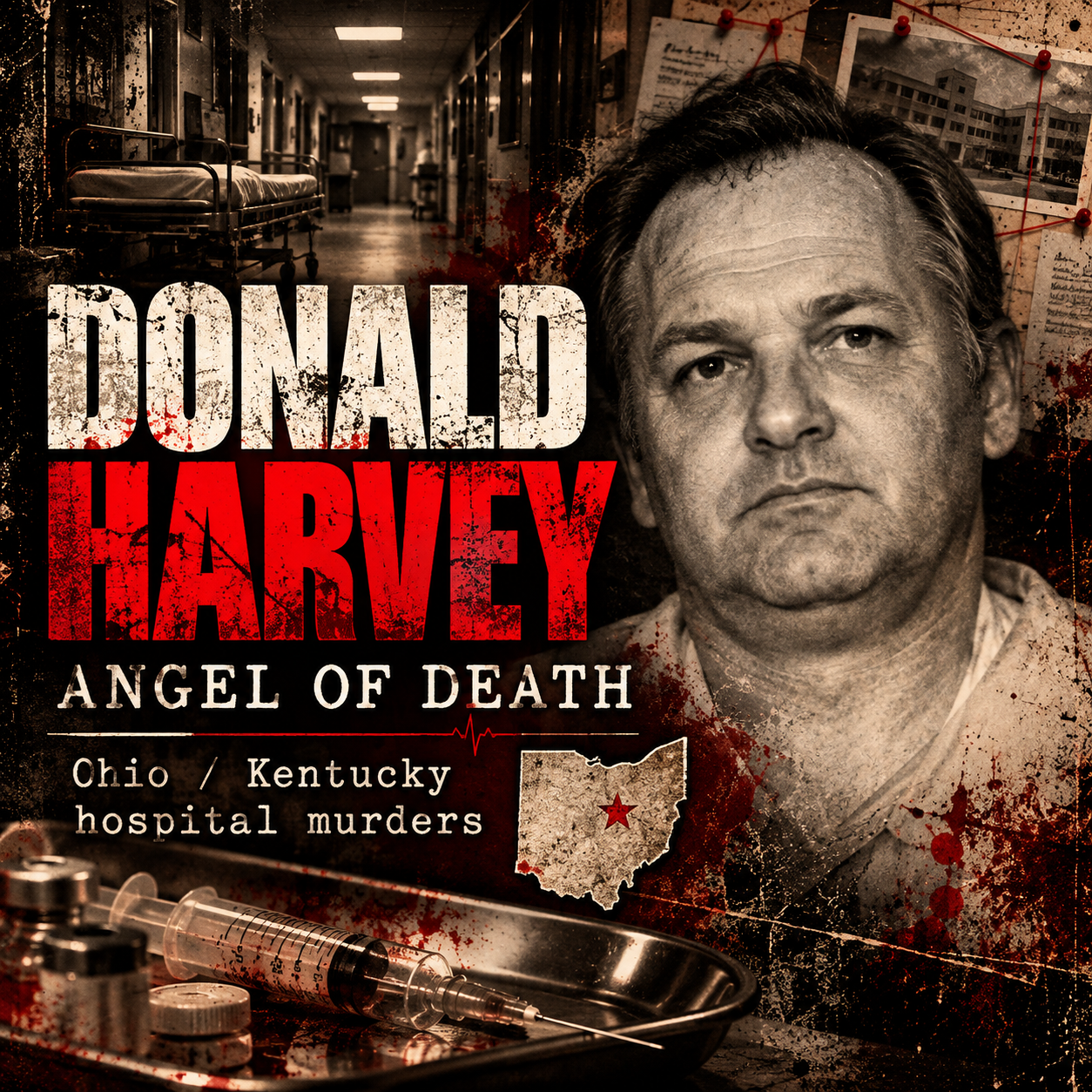
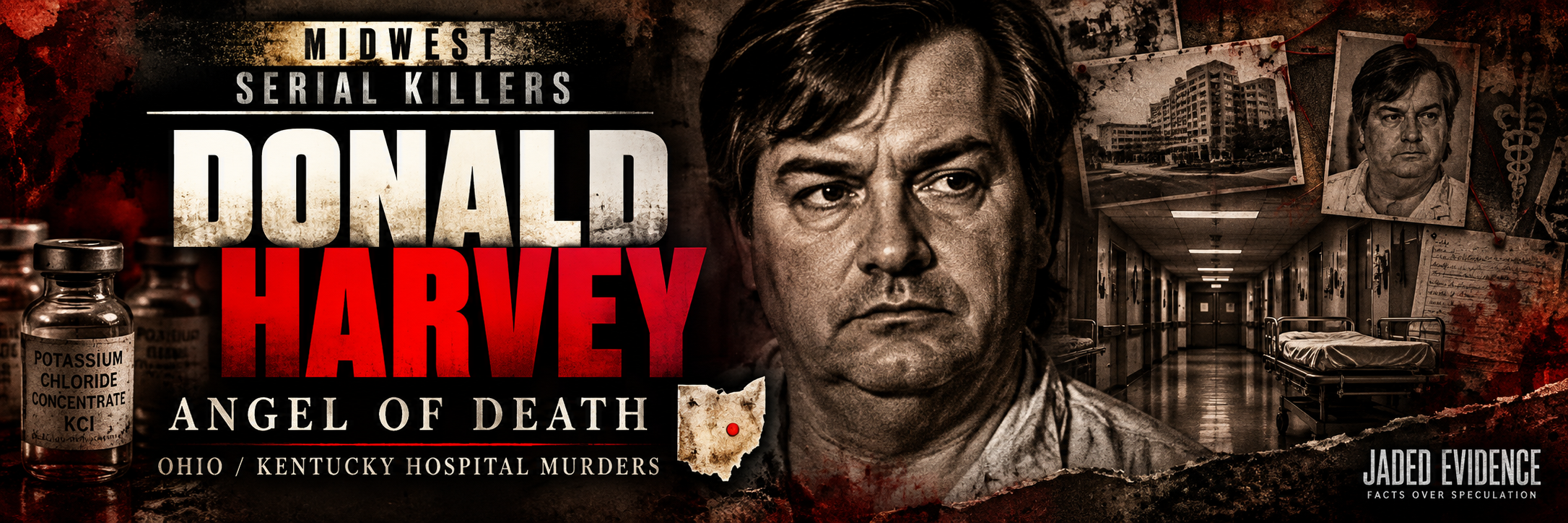
Donald Harvey was a hospital orderly and healthcare worker who admitted killing numerous patients in Ohio and Kentucky over many years.
The Investigation
The case emerged after suspicious findings in the death of a patient led investigators toward poisoning and a broader review of Harvey’s history around patient deaths.
Plea Agreements and Victim Count
Harvey pleaded guilty in Ohio and Kentucky cases. He confessed to far more killings than were formally prosecuted, creating an important distinction between admitted and judicially established victims.
Death in Prison
Harvey died in prison in 2017 after being attacked by another inmate.
Why This Case Matters
Healthcare serial homicide is uniquely difficult to detect because death is expected in hospitals and long-term-care settings, and offenders can exploit that normal background mortality.
Known Victims
Harvey ultimately pleaded guilty to 37 murders in Ohio and Kentucky. The judicially established roster includes patients and acquaintances such as Logan Evans, James Tyree, Elizabeth Wyatt, Eugene McQueen, Ben Gilbert, Maude Nichols, William Bowling, Viola Wyran, Margaret Harrison, Samuel Carroll, Silas Butner, John Combs, Milton Sasser, Helen Metzger, Henry Hoeweler, James Peluso, Nathaniel Watson, Leon Nelson, Virgil Weddle, Doris Nally, Robert Crockett, Donald Barney, James Woods, Ernst Frey, Milton Canter, Roger Evans, Albert Buehlemann, William Collins, Henry Cody, Mose Thompson, Odas Day, Cleo Fish, Leo Parker, Margaret Kuckro, Stella Lemon, Joseph Pike, and John Powell.
Harvey claimed substantially more victims than prosecutors could independently establish. The page therefore keeps the 37 pleaded/confirmed murders separate from higher offender-claimed totals.
Investigation Highlights
- John Powell’s 1987 autopsy revealed cyanide, an unexpected toxicology finding that triggered the criminal investigation.
- Hospital staff had previously noticed an unusual concentration of deaths around Harvey but the concerns did not initially produce a full investigation.
- Exhumations, toxicology, medical records, and Harvey’s detailed confessions allowed prosecutors to corroborate numerous killings.
- The case exposed major institutional vulnerabilities involving medication access and assumptions about expected hospital mortality.
Psychiatric and Psychological Record
A prosecution psychiatrist described Harvey as a compulsive killer whose stated “mercy” rationale did not account for all of the deaths. Public reporting documents suicidality and psychiatric history, but no single diagnosis should be used as a catch-all explanation for decades of offending.
Modus Operandi vs. Signature
Modus operandi: Exploiting healthcare access and using many methods—cyanide, arsenic, other poisons, suffocation, oxygen manipulation, drug overdose, and tampering with medical equipment.
Signature: Harvey did not maintain one stable ritualistic method. The defining behavioral pattern was covert control over medically vulnerable people and the ability to make intentional deaths resemble expected deterioration.
Leave a Reply