

CONTENT NOTE: This article discusses sexual assault, strangulation, homicide, prostitution, and cold-case DNA testing.
Facts over speculation. Follow the evidence.
One Conviction — Then DNA Reopened the Story
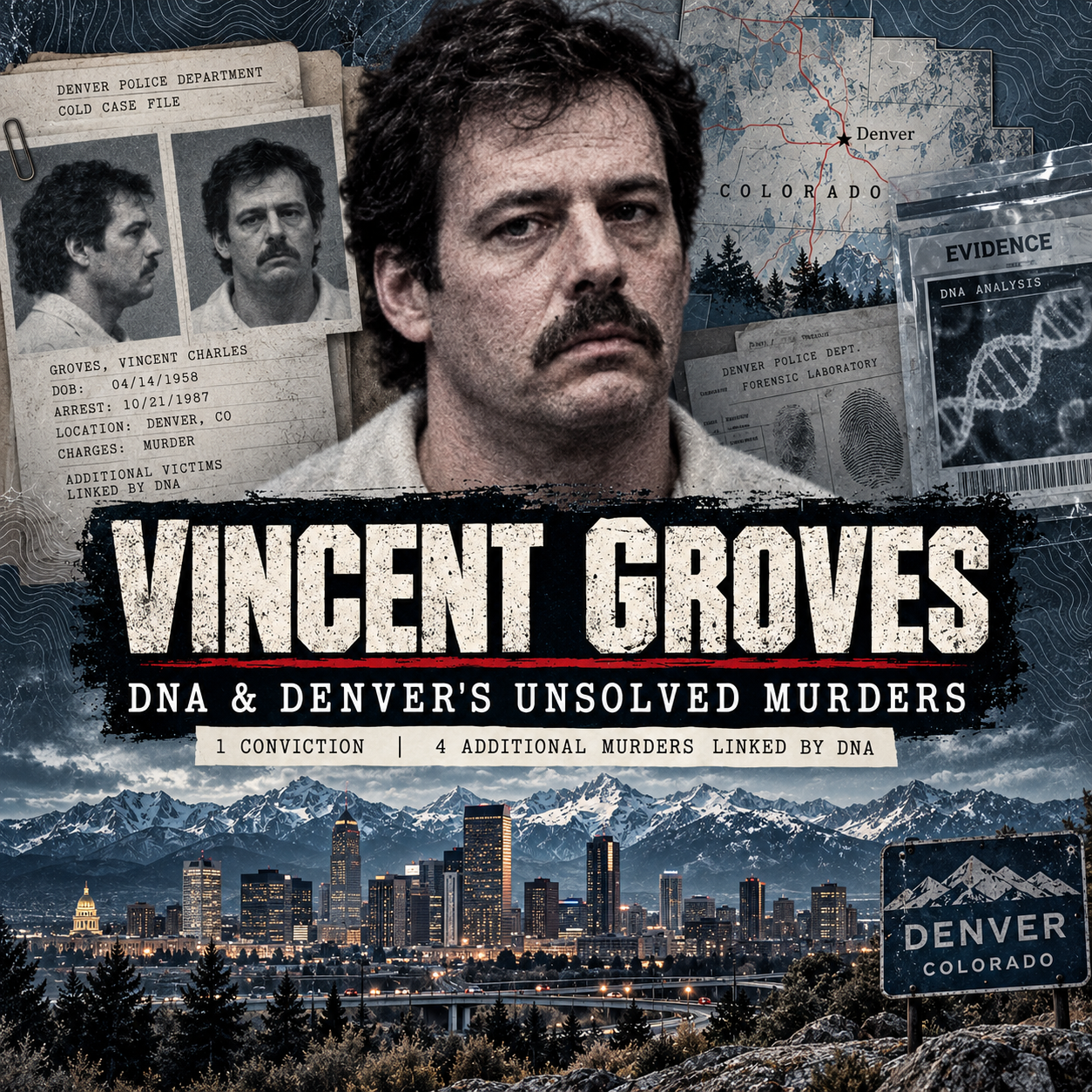
Vincent Darrell Groves was convicted in Colorado of first-degree murder in a strangulation case involving a woman who had been working as a prostitute. The Colorado Court of Appeals affirmed that conviction.
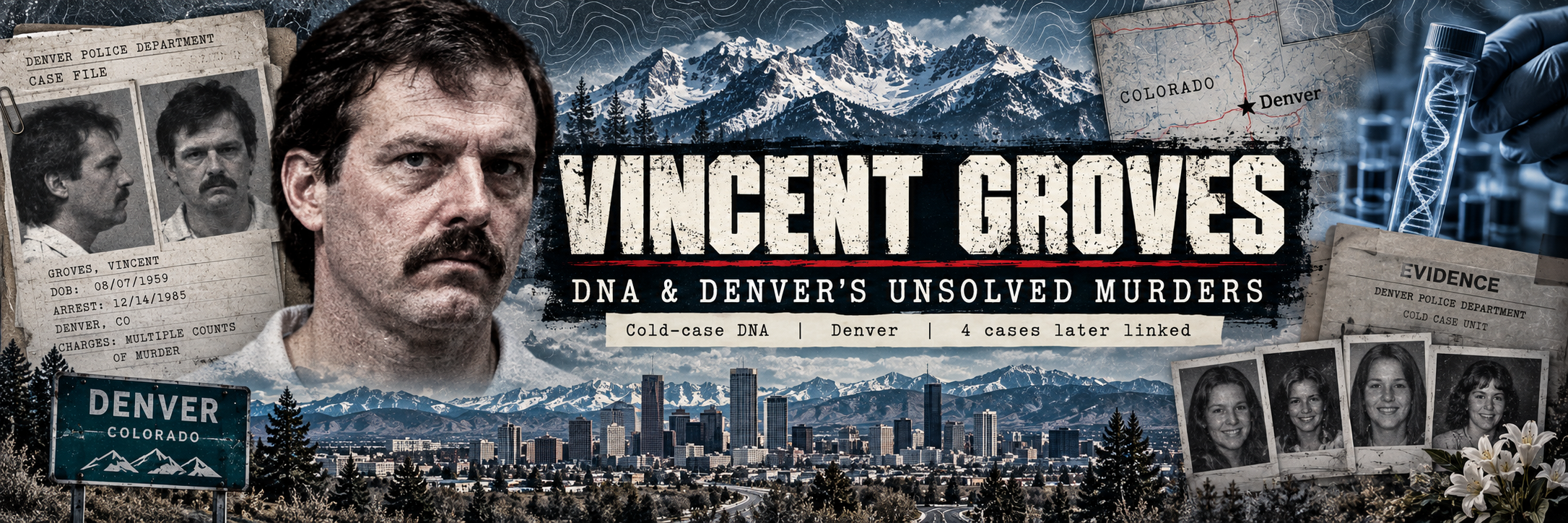
Years after Groves died in prison, Denver investigators used cold-case DNA work to link him to four additional previously unsolved homicides.
The 1992 Appellate Record
The Colorado Court of Appeals described DNA evidence, witness testimony, a victim’s pendant found in Groves’s vehicle, and his prior conduct as key parts of the prosecution in the murder for which he was convicted.
The appellate record also documents an earlier 1981 killing to which Groves had confessed and a separate 1982 sexual assault in which the victim escaped.
Cold Case DNA Changes the Count
In 2012, the Denver District Attorney and Denver Police Department announced that the Cold Case Review Team had solved four previously unsolved homicides by directly linking them to Groves through DNA analysis.
The work was supported by a federal “Solving Cold Cases with DNA” grant and involved the Denver Police Department Crime Lab, Colorado Bureau of Investigation, and local partners.
Why the DNA Work Matters
The Groves investigation is a textbook example of why old biological evidence can become more valuable over time. Evidence collected decades earlier can be re-examined with newer DNA methods, producing links that investigators could not establish when the crimes occurred.
Confirmed Versus Investigative Attribution
| Category | Status |
|---|---|
| First-degree murder conviction | Affirmed by the Colorado Court of Appeals. |
| 1981 homicide confession | Documented in the appellate record. |
| 4 cold-case homicides | Closed by Denver authorities in 2012 after DNA linked them to Groves. |
| Other suspected cases | Should remain separate unless supported by forensic or investigative evidence. |
Groves Dies Before the Cold Cases Are Solved
Groves died in prison in 1996. Because he was already dead when the later DNA links were established, those four cases could be administratively solved but could not result in new prosecutions.
Jaded Evidence: Why This Case Matters
This case shows the difference between a courtroom conviction and a later forensic attribution. It also demonstrates how preserving biological evidence can allow investigators to solve murders long after a suspect has died.
Cold cases are not evidence-free cases. Sometimes the evidence is simply waiting for the technology to catch up.
Leave a Reply