

Exhibit J Case Study · Texas · Filicide / postpartum psychosis / insanity defense
Case overview
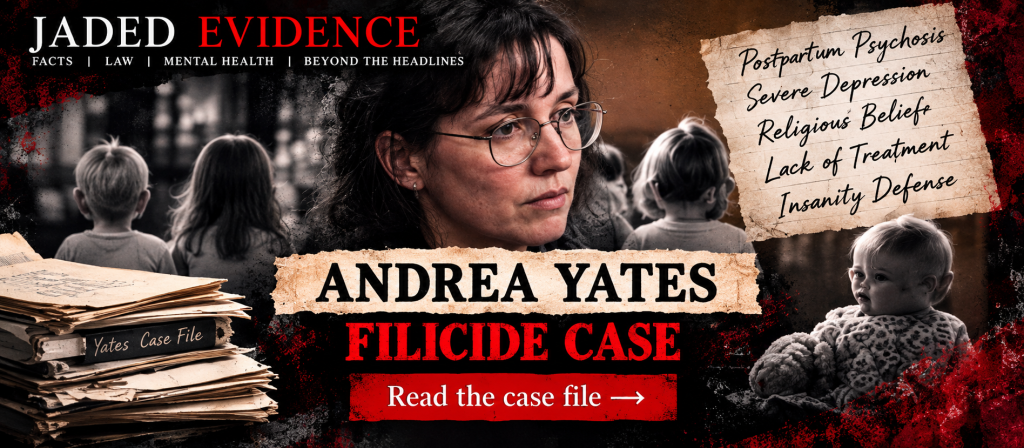
On June 20, 2001, Andrea Yates drowned her five children — Noah, John, Paul, Luke, and Mary — in the bathtub of the family’s Houston-area home. The killings became one of the most closely examined U.S. cases involving severe postpartum psychiatric illness and the criminal-law insanity standard.
Psychiatric history before the killings
Evidence presented in the criminal proceedings documented years of serious psychiatric illness, including severe depression, psychosis, suicidality, psychiatric hospitalization, and treatment surrounding pregnancies and childbirth. At the first trial, multiple psychiatrists and psychologists testified about the severity of her illness. The appellate opinion later noted that several experts believed that, at the time of the killings, Yates either did not know right from wrong or believed her actions were right.
The first trial
Yates was tried in 2002 on capital-murder charges. The defense raised insanity. The jury rejected the defense, found her guilty, and she was sentenced to life imprisonment.
The testimony that overturned the conviction
The State’s sole mental-health expert, psychiatrist Park Dietz, testified that a Law & Order episode had aired shortly before the killings involving a woman with postpartum depression who drowned her children and was found insane. The episode did not exist. The Texas First Court of Appeals concluded that the false testimony was material and that there was a reasonable likelihood it could have affected the jury’s judgment. In January 2005, the court reversed Yates’s conviction and remanded the case for a new trial.
The second trial and insanity verdict
At her 2006 retrial, the central issue again was criminal responsibility. The second jury found Yates not guilty by reason of insanity. That verdict did not mean the killings did not occur; it meant the jury concluded that the legal insanity standard was satisfied at the time of the offenses.
Why this case belongs in Exhibit J
The Yates case demonstrates why three questions must remain separate: Was a psychiatric disorder present? What did the defendant understand at the time of the offense? And did that mental state satisfy the jurisdiction’s legal insanity standard? The case also illustrates how expert testimony can materially shape a jury’s interpretation of psychiatric evidence.
Related reading
Evidence matrix
- Victims: five children.
- Clinical evidence: severe depression, psychosis, suicidality, prior treatment and hospitalization.
- Defense theory: severe mental illness prevented Yates from appreciating the wrongfulness of her conduct.
- Prosecution position: she was mentally ill but knew her conduct was wrong.
- Key appellate issue: materially false expert testimony concerning a nonexistent television episode.
- First result: guilty; life imprisonment.
- Appellate result: conviction reversed and remanded.
- Second result: not guilty by reason of insanity.
Primary legal source
Texas First Court of Appeals — Yates v. State (2005)
Clinical diagnosis and legal insanity are not interchangeable. Exhibit J separates medical evidence, expert interpretation, and the governing legal standard.