
JADED EVIDENCE · INTERACTIVE INVESTIGATION CASE FILE
Current legal status · Updated October 24, 2026: The federal trial is underway. Testimony continued October 23, 2026; no verdict is reported in the reviewed coverage. Farwell has pleaded not guilty and remains presumed innocent.
Farwell brothers & Jason Pickard — organized research · Latest dated testimony· Legal outcome
October 27, 2026 — Prosecution expert presents strangulation and altered-scene opinion
Boston 25 reported that prosecution expert Dr. William Smock told jurors he believed Sandra Birchmore died from strangulation and that the scene had been altered before the ligature was attached to the door. He cited the direction of the hyoid fracture, an imprint on Birchmore’s chest and hair caught in the ligature. William Farwell also testified that Matthew told him he had wiped phone data after Birchmore’s death. These are witness opinions and reported testimony, not a judicial finding or verdict; Matthew Farwell has pleaded not guilty.
October 26, 2026 — Medical examiner and William Farwell testify
Boston 25 reported that Dr. Maria Del Mar Capo Martinez, who performed Sandra Birchmore’s original autopsy, testified that her 2021 opinion listed asphyxia by hanging and suicide after she reviewed limited investigative information. She said later information led her to amend the cause to asphyxia and the manner to undetermined, and testified that she was not pressured to make that change. An undetermined manner is not itself a homicide finding.
William Farwell testified under a grant of immunity. He acknowledged a sexual relationship with Birchmore after she was an adult and said it occurred while he was on duty. His testimony continued on October 27, when William Farwell described the circumstances of his relationship with Sandra Birchmore and faced defense questioning about credibility. State medical examiner Dr. Maria Del Mar Capo Martinez explained her changed certification (cause: asphyxia; manner: undetermined) and denied pressure to revise it. Dr. William Smock testified for prosecutors about the fractured hyoid and other findings he considered inconsistent with the reported hanging; the defense disputed the interpretation. These are testimonial claims, not judicial findings. WBUR, October 27. Matthew Farwell has pleaded not guilty; the prosecution’s homicide and staging theory remains an allegation for the jury to decide.
October 20, 2026 — Federal trial testimony
FBI Special Agent Heidi Kelsch remained under cross-examination regarding electronic communications and the federal investigation into Sandra Birchmore’s death. The Boston Globe reported that former Stoughton dispatcher James Fitton was among potential witnesses on October 20. These are testimony developments, not judicial findings; Matthew Farwell remains presumed innocent and no verdict has been verified.
View More — sources and evidentiary limits
The federal government alleges Farwell killed Birchmore and staged her death. Those allegations are disputed. A reported paternity-test finding requires careful distinction from the government’s allegations and should not be treated as a court finding without the admitted exhibit or transcript. Sources: Boston Globe October 20; U.S. Attorney official case resource. Last checked October 20.
October 19, 2026 — Trial status update
Sandra Birchmore / Matthew Farwell: Federal trial testimony October 19 focused on recovered digital communications between Farwell and Birchmore. Reporting describes roughly 24,000 messages and jurors receiving selected communications. The government alleges homicide; the defense disputes that characterization. No verdict.
View More — Evidence, procedural status and source
Source: October 19 trial reporting. Witness testimony, counsel arguments, and evidence interpretations are not findings of guilt. This update preserves existing earlier case-file content.
02 | Victim background
Sandra Birchmore was 23 and pregnant when she died in Canton, Massachusetts, in February 2021. The case file distinguishes her life and documented history from the disputed accounts of her death.
Farwell brothers and Jason Pickard: relationships, testimony and records
Updated October 24, 2026 · Courtroom reporting reviewed through October 23. This section brings the people, chronology and documents into one place. Matthew Farwell has pleaded not guilty; the trial is ongoing. The name used in the court reporting is Jason Pickard.
Trial at a glance
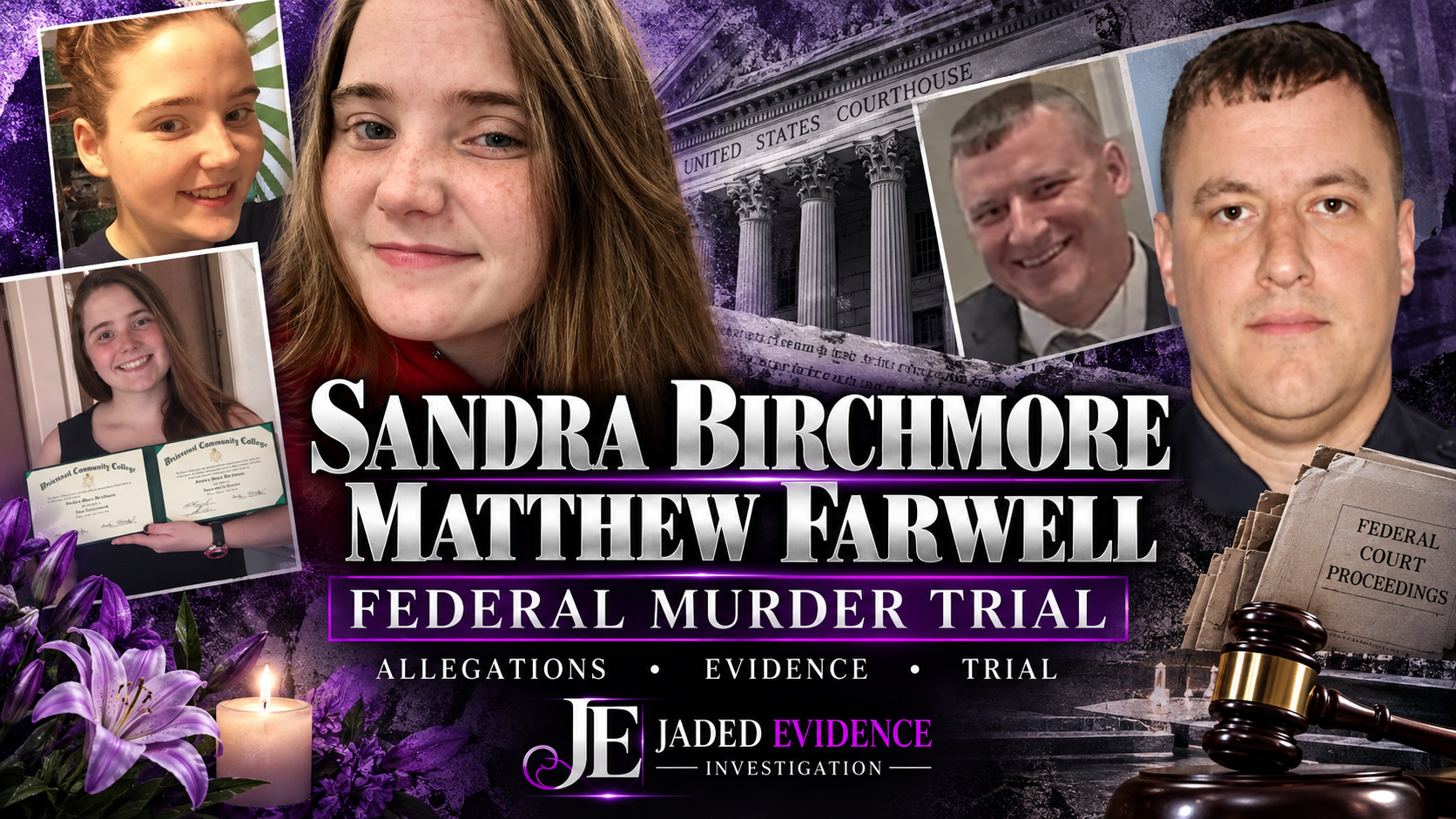
United States v. Matthew Farwell, 1:24-cr-10259-DJC: the federal murder trial is underway in Boston before Chief Judge Denise J. Casper. Prosecutors allege that Farwell strangled the pregnant, 23-year-old Birchmore on February 1, 2021 and staged a suicide to prevent disclosure of sexual abuse beginning when she was 15. Her body was found February 4; her death was initially ruled a suicide. The defense says she took her own life after he ended the relationship. DOJ charging account · Competing trial positions.
The superseding indictment charges killing a witness or victim and causing an unborn child’s death. DOJ describes the unborn-child count as carrying mandatory life imprisonment if convicted. DOJ explanation of the added count. There is no verdict.
People and legal roles
| Person | Documented connection | Status in this federal case |
|---|---|---|
| Matthew Farwell | Former Stoughton officer and Explorers instructor. | Defendant on witness/victim-killing and unborn-child counts; not-guilty plea. |
| William Farwell | Matthew’s twin brother; former Stoughton officer. | Listed prosecution witness; not a defendant in the superseding indictment. Still expected to testify in October 23 reporting. |
| Jason Pickard | Former Army recruiter; identified through DNA evidence as the unborn child’s biological father. | Testified October 22 under immunity; not a defendant in this indictment. |
| Robert Devine | Former Stoughton deputy chief and Explorers leader; included because the administrative investigation examined him alongside the brothers. | Separate police-discipline record; not a defendant in this indictment. |
Sources: superseding indictment; October 19 testimony about William; Boston.com — October 22 testimony and upcoming witnesses; Devine’s POST record. A witness-list entry does not establish a cooperation agreement or completed testimony.
Matthew and William Farwell
Matthew — what prosecutors allege and what the defense disputes
The superseding indictment alleges that Matthew sexually exploited Birchmore before she turned 16, continued sexual contact into adulthood, concealed encounters during paid police shifts, and killed her to prevent disclosure of possible federal offenses. It alleges that she told him he was the father of her pregnancy. The defense maintains that she died by suicide. These remain competing trial positions. Read the actual charging document.
Matthew’s Massachusetts police certification was permanently revoked March 21, 2024. His administrative agreement and order are distinct from his not-guilty plea in the federal case. Agreement · Order.
William — relationship allegations, police discipline and expected testimony
FBI agent Heidi Kelsch testified October 19 that Birchmore’s relationship with William began in July 2018, when she was 21. This is distinct from the underage-abuse allegations against Matthew. The testimony does not establish William’s participation in the alleged killing. October 19 court report.
POST’s official summary identifies allegations of unauthorized Criminal Justice Information System searches, sexually explicit messages while on duty, and false information given to State Police investigators during 2017–2021. William accepted permanent decertification on September 24, 2024. That is an administrative resolution, not a murder conviction. Official POST summary · Order and agreement.
Trooper Matthew Dunne’s October 14 testimony addressed interviews with William. That is testimony about an interview, distinct from William testifying himself. Boston 25’s October 23 report still described William as an expected witness. October 14 court report · October 23 witness preview.
Robert Devine — why his administrative case matters
Devine’s POST certification was revoked December 18, 2025 after a contested proceeding. The hearing officer found misconduct involving communications and an encounter with the person identified as S.B., and found Devine’s denials untruthful. Devine challenged the evidence and the use of hearsay. The Commission’s final decision rested on a pattern of unprofessional conduct and repeated sustained complaints; it expressly did not need to decide the additional untruthfulness finding. These distinctions matter when summarizing the decision. Final decision, PDF pages 1–4; initial decision follows.
Jason Pickard: testimony, paternity and immunity
Relationship chronology and the paternity result
Pickard described a sexual relationship beginning in December 2019 and continuing until Birchmore’s death. LAmag — relationship testimony. He was an Army recruiter, although he said he was not her assigned recruiter. Boston.com — clarification of his role.
Pickard said he supplied DNA June 24, 2025 and learned the result months later. Kelsch identified him as the biological father in court October 19. Older claims that Matthew was the biological father should be corrected. DNA-sample chronology · Kelsch’s October 19 testimony.
Pickard said Birchmore repeatedly identified Matthew as the father, spoke enthusiastically about the pregnancy, and sought help preparing her apartment. LAmag reports that he last saw her January 28, 2021 while helping babyproof it. These are his recollections, not a medical determination of her state of mind. WHDH — October 22 · LAmag — January 28 account.
Immunity and questions raised during cross-examination
Chief Judge Casper cautioned jurors to consider Pickard’s immunity when assessing credibility, Boston.com reports. The signed agreement and order have not been reviewed here. Immunity should not be described as a guilty plea; its complete scope remains to be documented. Courtroom account of the judge’s instruction.
Pickard said he encouraged Birchmore to report the alleged underage abuse but did not report it himself, explaining concerns about his family, career and her request for secrecy. The defense challenged his account of suicide-related conversations: WHDH reports that he denied hearing suicidal thoughts while they were together, then acknowledged that FBI interview material appeared to record him saying otherwise. The complete interview and transcript are needed to evaluate the discrepancy. WHDH — testimony and cross-examination.
Connections and evidence limits
The reported link between William and Pickard
LAmag, citing police records, attributes a 2018 military-recruitment introduction to William and reports that investigators recovered intimate images involving Pickard and Birchmore on the brothers’ devices. It reports that Brian Holmes referred concerns to military authorities and the FBI. Those reports require comparison with the underlying records and admitted exhibits. LAmag — records and Holmes testimony.
An alleged recruitment introduction in 2018 and the reported start of Pickard’s sexual relationship in December 2019 describe different events. The available material should not be compressed into a single first-meeting date. The images themselves are not reproduced here.
What the paternity result and DNA evidence do—and do not—establish
Analysis: Biological paternity, what Birchmore said, and what Matthew believed are separate questions. The indictment describes her statement to him, while prosecutors allege a witness-silencing motive. Pickard’s paternity result does not determine who caused her death; neither does it establish guilt against Matthew. Each charge requires its own proof. Compare paragraphs 6–13 of the indictment with the later paternity testimony.
Duval testified October 22 that Matthew’s DNA was on the ligature strap. He was excluded from the fingernail sample; both men were associated with underwear samples. These results address different samples. Analysis: DNA presence alone does not establish when or how it arrived. October 22 forensic testimony.
Relationship and case chronology
| Date | Event and source |
|---|---|
| 2010–2013 | Birchmore enters Explorers as a child; prosecutors allege sexual abuse before 16. Superseding indictment. |
| December 2019 | Pickard dates the start of the sexual relationship to this month. Testimony. |
| December 2020 | Pregnancy disclosed; Birchmore identifies Matthew as the father. Charging allegations. |
| January 20, 2021 | Friend’s call to Stoughton police; dispatcher Fitton later testifies about it. October 20 testimony. |
| January 28, 2021 | Pickard’s reported last in-person visit, helping prepare the apartment for the baby. Reported recollection. |
| February 1–4, 2021 | Alleged killing February 1; Birchmore found during the February 4 welfare check. FBI affidavit, paragraphs 7–9. |
| March / September 2024 | Matthew decertified March 21; William September 24. Matthew order · William order. |
| August 28, 2024 | Matthew arrested on the original federal witness/victim-killing charge. DOJ case history. |
| June 24, 2025 onward | Pickard provides DNA; learns paternity months afterward, according to his testimony. Court report. |
| October 28, 2025 | Superseding indictment adds the unborn-child count. ECF 63. |
| December 18, 2025 | Commission revokes Devine’s certification. Final POST decision. |
| October 2026 | Current federal trial; Pickard testifies October 22. See the dated court log below. |
Daily trial record: the evidence to compare
Use calendar dates rather than inconsistent outlet numbering. The entries summarize reported testimony and arguments, not jury findings.
| Court date | Principal material | Source |
|---|---|---|
| October 14 | Dunne: initial investigation, Matthew’s interview and interviews involving William. Defense questions scene assessment and the earlier suicide investigation. | Court recap |
| October 15–16 | Guarino: device extractions and data preservation. Holmes: internal investigation. Beckstrom and Kelsch: recovered digital evidence. | October 15 · October 16 |
| October 19 | Kelsch: pregnancy communications, paternity and cross-examination on older self-harm material. | Court recap |
| October 20 | Fitton: January 20 call and Matthew’s reaction. On cross, he recalls no report of an adult/minor crime and says he routinely discarded notes. | Court recap |
| October 21 | Barber and Barrett: observations of Matthew and statements they attribute to him. Rocchio gives general grooming evidence; her testimony is distinct from a case-specific clinical evaluation. | Court recap |
| October 22 | Pickard’s testimony and immunity; Duval’s DNA results; other women’s accounts of affairs and the absence of disguises. The mask’s significance remains contested. | Court recap |
| October 23 | Friend Crean and therapist Diala Alkhalil testify. Alkhalil describes no suicidal ideation at their January 31 session; expected to return October 26. | NBC Boston recap |
Accounts requiring care: Fitton’s testimony about a personal call should be compared with prosecutors’ broader disclosure theory. His description of discarded notes does not by itself prove an unlawful cover-up. Likewise, witnesses’ recollections of Matthew’s words require their full context. The defense’s cross-examination and the court’s actual rulings belong alongside the prosecution account.
What is expected next
October 28, 2026 — Reported plan: Boston.com reports that the prosecution expects to finish after recalling FBI agent Heidi Kelsch and calling digital-forensics expert Jessica Hyde. The defense would follow. These are anticipated steps; the report reviewed does not establish that the prosecution has rested. Closing arguments are tentatively anticipated late next week. Boston.com — October 28 live report.
Historical planning note — October 23 report: The earlier plan anticipated Alkhalil, the medical examiner and William Farwell. The latter two have since testified; the October 28 update above supersedes this older schedule. Boston 25 — October 23 schedule. Prosecutors anticipated resting by Wednesday, October 28, according to Boston.com’s October 22 report. Closing arguments could follow in early November; no verdict date is confirmed.
Exhibit access: October 19 reporting describes an order requiring the government to remove posted trial exhibits until a verdict. Mass Legal Resources summary of the order. That site compiles other reporting and filings; it is not treated here as an independent courtroom witness. The signed order remains a document to obtain. Cached exhibit links do not establish current authorized availability.
What changed between the indictments
The four-page 2024 indictment and five-page superseding indictment filed October 28, 2025 are linked in the document collection below. The later filing retains the witness-killing count and adds a separate unborn-child count.
| Issue | Original indictment — 2024 | Superseding indictment — October 28, 2025 |
|---|---|---|
| Count One | Killing a witness or victim, 18 U.S.C. § 1512(a)(1)(C), on PDF page 3. | Retains that count and its core witness-silencing allegations, on PDF page 3. |
| Count Two | No separate unborn-child count. | Adds Protection of Unborn Children, 18 U.S.C. §§ 1841(a)(1), (a)(2)(A) and (a)(2)(C), on PDF page 4. It alleges that the conduct violating § 1512 also caused the child’s death. |
| Pregnancy allegation | Paragraph 6 says Birchmore told Matthew that he was the father. | Keeps that statement and adds paragraph 9 alleging an unborn male child at eight to ten weeks’ gestation. |
| Named defendant | Matthew Farwell. | Matthew Farwell. William Farwell and Jason Pickard are not named as defendants in either document. |
Reading the charges: The references to deprivation of rights under color of law (§ 242), coercion and enticement (§ 2422(b)) and wire fraud (§ 1343) identify possible underlying federal offenses in the witness-silencing allegation. They are not three additional counts in these indictments. Paragraph 6 reports what Birchmore told Matthew; it does not establish biological paternity. Both filings contain allegations, not findings of guilt.
Read the original indictment — 4 pages · Read the superseding indictment — 5 pages
Primary document collection
Original agency-hosted documents are grouped below. The 2022 department report is an identified archive copy. Pretrial filings, administrative orders and admitted trial exhibits serve different purposes.
- DOJ case page — United States v. Matthew Farwell
Official case number and original federal charging links. - Original indictment — August 2024 (4 pages, PDF)
The original witness/victim-killing charge; compare with the later two-count indictment. - Superseding indictment — ECF 63, October 28, 2025 (5 pages, PDF)
The two charged counts and the government’s allegations; not findings of guilt. - FBI detention affidavit — ECF 9-1, August 28, 2024 (45 pages, PDF)
Investigators’ sworn account of messages, surveillance and investigative steps; predates the 2025 paternity result. - Government detention motion — August 28, 2024 (PDF)
Prosecution detention arguments, separate from the affidavit and from trial findings. - Matthew Farwell — voluntary decertification agreement (4 pages, PDF)
Administrative agreement approved March 21, 2024. - Matthew Farwell — decertification order (1 page, PDF)
Binding permanent certification revocation. - William Farwell — decertification order and agreement (5 pages, PDF)
September 24, 2024 administrative resolution; read with the official POST summary. - Robert Devine — final and initial POST decisions (34 pages, PDF)
December 18, 2025 final revocation and the earlier hearing officer’s findings. - POST decertified-individuals list — October 16, 2026 (5 pages, PDF)
Lists Matthew Farwell, William Farwell and Robert Devine; a certification list, not a criminal-charge list. - Stoughton internal-affairs findings — 2022 (60-page PDF, archive copy)
Department-authored report hosted by a third-party archive. Administrative material should be distinguished from admitted trial evidence.
The existing witness-list section below preserves the supplied October 12, 2026 amended prosecution roster. It should be used alongside a completed-testimony log, not treated as proof that every listed person appeared.
Grooming allegations: a guide to the FBI affidavit
In this context, grooming describes developing trust and attachment to facilitate sexual exploitation and concealment. Mentoring, attention and access may be used to cross boundaries and sustain secrecy. RAINN’s explanation. The following references locate investigators’ allegations in the 45-page affidavit of FBI Special Agent Chenee Castruita, ECF 9-1, August 28, 2024. This is a pretrial sworn account, not a verdict or a complete trial transcript.
| Topic | Paragraphs | PDF pages |
|---|---|---|
| Police Explorers, authority and the alleged childhood-abuse timeline | 10–15 | 4–5 |
| October 2012 Facebook contact and later messages recalling earlier events | 16–23 | 6–8 |
| Later messages describing role-play | 24–25 | 8–9 |
| Witness accounts of homework help and messages referring to library tutoring | 26–29 | 9–10 |
| Alleged punishment and location monitoring | 109–113 | 39–41 |
| Alleged instructions to delete messages | 118–119 | 43–44 |
Keep dates and recollections distinct: The affidavit alleges intercourse in April 2013, when Birchmore was 15. Witnesses’ accounts of when a relationship, contact or abuse began should remain attributed to each witness; those descriptions should not be combined into a single agreed starting age. Later messages looking back on childhood events also need to be distinguished from messages sent at the time.
Reported behavior changes and role-playing terminology
Boston.com’s October 19 recap attributes to FBI agent Heidi Kelsch testimony about a role-playing character named Joey. That reporting supports describing a character used during sexual encounters. It does not establish a clinical diagnosis of an alternate personality. Reports of changes in mood or demeanor likewise should remain descriptions of observed or reported behavior. Read the October 19 account.
Questions and records still needed
- Exhibit-access order: obtain the signed October 19 order and any later amendment before describing its precise reach.
- Pickard’s immunity: obtain the signed agreement, order, conditions and complete jury instruction before describing its full federal or military scope.
- Pickard’s prior statements: compare the FBI interview with the October 22 direct and cross-examination, particularly the suicide-related discrepancy.
- William’s testimony: obtain the transcript if and when he appears; distinguish it from Dunne’s account of interviewing him.
- Recruitment connection: compare the underlying recruitment records and internal-affairs exhibits with the reported 2018 introduction and 2019 relationship chronology.
- Digital material: identify admitted exhibits, extraction provenance and any limiting instructions. A reference in a detention filing is not confirmation that the jury saw it.
- DNA: obtain the laboratory reports, likelihood ratios, sample identifiers and transfer testimony rather than treating an inclusion or exclusion as a complete reconstruction.
- Brothers’ communications: establish who authored, received or forwarded each relevant message and when; do not assign one brother’s conduct to the other.
↑ Contents · Full case timeline · Earlier courtroom coverage
03 | People and documented roles
Sandra Birchmore: victim. Matthew Farwell: former Stoughton police officer and federal defendant. Kimberly Stevens: defense counsel identified in trial reporting.
View More — Matthew Farwell’s background: police career, youth-program role and decertification
View more — source context & reading guide
This section retains its original research, imagery, citations and links below. Separate court-established facts from allegations, opening statements, witness estimates, and forensic interpretations. Follow linked primary records when available; dates and disputed details should be independently verified.

Research update: October 11, 2026. The distinction between an administrative finding, an allegation in a criminal filing and a criminal conviction is essential. Farwell has pleaded not guilty to the federal charges.
View More — Proposed trial witnesses: prosecution and defense
View more — source context & reading guide
This section retains its original research, imagery, citations and links below. Separate court-established facts from allegations, opening statements, witness estimates, and forensic interpretations. Follow linked primary records when available; dates and disputed details should be independently verified.

Witness-list update, October 13, 2026. The Government’s First Amended Witness List, dated October 12, 2026, names 67 individuals whom prosecutors may call in their case in chief. The government reserves the right to supplement the list and call additional rebuttal witnesses. This amended filing is the current prosecution roster reviewed for this page; the September 11 government list is retained as historical context. The defense information below comes from earlier filings and reporting; no amended defense list was supplied with this update. Inclusion does not establish that a witness has testified, will testify, or supports a party’s theory.
04 | Interactive chronological timeline
Evidence-linked case timeline
Expand any event to see what the current record supports, what remains contested, and a related source. Exact times are included only when reasonably grounded. Some links lead to an original document collection rather than a specific timestamped exhibit.
2010 — Police Explorers connection (Background)
Investigative materials describe Birchmore joining Stoughton Police Explorers while a minor. Alleged misconduct and its precise onset are disputed in the criminal proceeding.
January 20, 2021 — Reported disclosure to police (Charging allegation)
The federal charging narrative describes a report concerning the relationship. The exact transmission and response should be assessed against records and testimony.
February 1, 2021 — Final-day contacts and apartment surveillance (Disputed reconstruction)
Federal prosecutors allege Farwell visited Birchmore and killed her. The defense disputes homicide. The post describes reported evening surveillance and device activity; those reported timestamps must be checked against admitted exhibits.
February 2021 — Birchmore found deceased (Investigative finding)
The death scene was initially investigated as a suicide. Subsequent investigators and forensic experts disputed the interpretation. Discovery time is not treated as the time of death.
August 29, 2022 — Stoughton internal affairs findings (Administrative)
Stoughton investigated conduct involving former officers. Administrative findings are distinct from the federal criminal charges.
February 12, 2024 — Civil-case sanctions order (Judicial ruling)
A Massachusetts judge sanctioned plaintiff’s counsel for unverified fictitious citations; the sanction was not a finding on the wrongful-death merits. The underlying order remains the controlling source.
March 21, 2024 — Farwell decertification agreement (Administrative order)
POST permanently decertified Farwell pursuant to an agreement that did not admit the allegations; no federal criminal verdict followed from the agreement.
August 27–28, 2024 — Federal indictment and arrest (Criminal charges)
Prosecutors charged Farwell with killing a witness or victim. These are allegations; Farwell pleaded not guilty.
October 28, 2025 — Superseding federal indictment (Criminal charges)
The charging instrument added an allegation concerning Birchmore’s unborn child. This is not a finding of guilt.
April 30, 2026 — Medical examiner amendment (Official classification)
The manner of death was amended from suicide to undetermined. Undetermined is not equivalent to an official homicide ruling.
September 2026 — Pretrial evidence rulings (Court procedure)
Admissibility disputes concerned Birchmore’s statements, electronic evidence and clinical history. Conditional evidentiary rulings do not decide guilt.
October 9, 2026 — Jury seated; opening statements (Trial arguments)
Prosecution and defense outlined conflicting theories. Openings are arguments, not evidence; the article is current through October 11.
October 11, 2026 — Government files motion for curative instructions (ECF 339)
Documented event: The government filed a nine-page motion requesting corrective instructions on verdict unanimity and the federal witness-tampering charge before testimony scheduled for October 13, plus restrictions on references to disputed or unnoticed exhibits.
Supporting record: ECF 339, filed October 11, 2026, in No. 1:24-cr-10259-DJC; reader-supplied copy bearing the court’s filing header.
Disputed information: The motion presents prosecutors’ objections to the defense opening and proposed exhibits. It is not proof that the court granted the requested relief. Its references to the opening rely on a rough, unofficial transcript. The government acknowledges that its objection to affidavit T13 was overruled.
View filing summary, page references, and source details · Read ECF 339 (PDF, 9 pages) · Back to Timeline
October 12, 2026 — Government’s first amended witness list (Primary filing)
The government’s dated amended list names 67 potential case-in-chief witnesses and reserves supplementation and additional rebuttal witnesses.
Supporting record: Government’s First Amended Witness List, Criminal No. 24-CR-10259-DJC, dated October 12, 2026; three supplied pages. The visible copy does not show an ECF entry number.
Limit: Listed names do not confirm actual testimony, testimony order, or the substance of a witness’s evidence.
October 13, 2026 — First witnesses testify (Reported courtroom testimony)
Testimony began October 13. Read the six-witness courtroom log. The link below preserves the earlier opening-statement report.
View More — October 14 — Original state investigation examined
View More — October 15 — Institutional response and friend testimony
05 | Investigation and evidence
View More — Evidence and medical examiner questions
Investigators initially classified Birchmore’s death as suicide. Federal prosecutors later alleged that the death was a homicide staged to resemble suicide. The distinction between an initial manner-of-death determination, later forensic opinions, and the jury’s ultimate findings is central to this case. Jaded Evidence will track autopsy interpretation, scene reconstruction, alleged ligature findings, digital evidence and chain of custody without presenting disputed theories as established fact.
View More — Forensic evidence: suicide, homicide, or undetermined?
View more — source context & reading guide
This section retains its original research, imagery, citations and links below. Separate court-established facts from allegations, opening statements, witness estimates, and forensic interpretations. Follow linked primary records when available; dates and disputed details should be independently verified.

Initial official finding: The Massachusetts medical examiner classified Sandra Birchmore’s manner of death as suicide in 2021. Reporting in October 2026 states the death certificate was subsequently amended to list the manner as undetermined. This does not itself constitute a homicide determination.
View More — Birchmore’s mental-health history and the defense’s suicide theory
View more — source context & reading guide
This section retains its original research, imagery, citations and links below. Separate court-established facts from allegations, opening statements, witness estimates, and forensic interpretations. Follow linked primary records when available; dates and disputed details should be independently verified.

Research update: October 11, 2026. Allegations and statements by counsel are attributed; no mental-health diagnosis or suicide determination is inferred from isolated facts.
View More — Primary-source review: Canton Police investigation and February 2021 timeline
Updated October 11, 2026. Source: Town of Canton, April 1, 2025, official police review.
View More — Evidence audit: overlooked death-scene items and the January 20 call
Updated October 11, 2026. These points concern reported investigative records and the parties’ October 9 opening statements; they are not jury findings.
View More — Trial evidence audit: disputed DNA interpretation, phone-search consent and admissibility
View more — source context & reading guide
This section retains its original research, imagery, citations and links below. Separate court-established facts from allegations, opening statements, witness estimates, and forensic interpretations. Follow linked primary records when available; dates and disputed details should be independently verified.
October 11, 2026 research update. This section describes October 9 opening statements and arguments outside the jury’s presence, not sworn testimony or jury findings.
View More — Digital-evidence preservation: lost laptop data and renewed phone search
Research update October 11, 2026. These matters were raised in pretrial proceedings and reported by journalists; the original motions, extraction logs and court rulings remain necessary for full verification.
View More — Treating clinicians and suicide-risk evidence: September 2026 admissibility rulings
View more — source context & reading guide
This section retains its original research, imagery, citations and links below. Separate court-established facts from allegations, opening statements, witness estimates, and forensic interpretations. Follow linked primary records when available; dates and disputed details should be independently verified.
Research update: October 11, 2026. The following describes pretrial rulings and anticipated evidence, not testimony already heard by the jury.
06 | Prosecution and defense theories
View More — What prosecutors allege
Federal prosecutors allege Farwell sexually exploited Birchmore beginning when she was a teenager, later killed her in her Canton apartment in February 2021 and staged her death to appear to be suicide. Prosecutors contend Birchmore’s pregnancy and knowledge of the alleged exploitation provided a motive. They described surveillance imagery and a proposed strangulation mechanism during opening statements. These assertions remain to be tested through witness testimony and cross-examination.
View More — What the defense argues
Defense counsel Kimberly Stevens disputed the homicide allegation and argued Birchmore died by suicide. Counsel referred to messages and her reported mental-health history. Neither side’s opening statement is evidence. The jury must evaluate admissible testimony, expert evidence and exhibits.
View More — October 11 research update: what opening statements establish—and do not
Trial status: Sixteen jurors (12 plus four alternates) were seated on October 9. Both sides delivered opening statements; reporting indicates no witness testimony or admitted evidence was presented that day. Testimony is expected to begin Tuesday, October 13, following the holiday. Opening statements are not evidence.
View More — Pretrial rulings: Birchmore’s statements and the electronic discovery record
Forfeiture by wrongdoing (Federal Rule of Evidence 804(b)(6)): A September 17, 2026 ruling reportedly allowed the government to introduce certain out-of-court statements by Sandra Birchmore conditionally, while Chief U.S. District Judge Denise J. Casper reserved a final determination about the rule’s requirements until the close of evidence. This procedural decision does not establish Farwell’s guilt; he has pleaded not guilty and remains presumed innocent. The defense also prevailed on a motion to prevent the FBI from presenting the parties’ text messages through dramatized audio narration, meaning jurors would read rather than hear agent-voiced messages. Pretrial order analysis and docket references.
07 | Trial testimony and courtroom developments
October 22–23 — Paternity evidence and therapist testimony
Jason Pickard testified October 22 after DNA testing identified him as the biological father of Birchmore’s unborn child. Her reported belief that Farwell was the father remains distinct from the test result. Pickard testified under an immunity agreement. PEOPLE — Pickard’s testimony.
On October 23, therapist Diala Alkhalil testified that she observed no suicidal ideation at Birchmore’s January 31, 2021 appointment. NBC Boston reports she is expected to resume testimony Monday, October 26. This is witness evidence, not a judicial determination of cause or manner of death. Prosecutors indicated they could finish their case the following week; the trial remains ongoing. NBC Boston — October 23 court recap.
View More — October 12 — Historical trial schedule
Historical trial update — October 12, 2026. October 12 status: Opening arguments took place Friday, October 9. The court recessed for the October 12 federal holiday; witness testimony is expected to begin Tuesday, October 13. The prosecution alleges Matthew Farwell strangled Sandra Birchmore and staged her death; the defense maintains she died by suicide. These are opposing trial theories, not findings by the jury. No verdict reported. Opening-statement reporting. Opening statements were delivered October 9 in the federal prosecution of former Stoughton police officer Matthew Farwell concerning the death of Sandra Birchmore and her unborn child. Farwell has pleaded not guilty. The statements summarized below are competing allegations and arguments, not findings by a jury.
Dated reports preserve earlier schedules and testimony in context. Witness-list entries do not establish that a person testified. Motions are requests until ruled upon.
View More — October 9 courtroom developments: objections after opening statements

Updated October 11, 2026. Source: Boston Globe live courtroom reporting, October 9. No witness testimony had begun.
View More — October 11, 2026 — Government requests curative jury instructions after defense opening (ECF 339)
Source: Government’s Motion for Curative Instructions, United States v. Matthew Farwell, District of Massachusetts, No. 1:24-cr-10259-DJC, Document 339, filed October 11, 2026, nine pages. This summary is based on the reader-supplied copy bearing the court’s filing header.
View Government’s Motion for Curative Instructions — ECF 339 (PDF, 9 pages)
Prosecutors asked the court to give corrective instructions before testimony scheduled for October 13 and to require advance consideration outside the jury’s presence before the defense substantively questioned witnesses about disputed or unnoticed exhibits, except impeachment evidence. The motion challenges statements in the October 9 defense opening about verdict unanimity, the federal witness-tampering charge, and several proposed exhibits.
Status: This is a prosecution motion, not a court ruling. The supplied filing does not establish whether the court granted the requested instructions or restrictions. Farwell has pleaded not guilty and is presumed innocent.
View More — Requested jury instructions and the disputed legal statements
Verdict unanimity (pages 1–2): The government alleges that defense counsel told jurors that one juror’s finding that the burden of proof had not been met required acquittal. Prosecutors requested an instruction that either a guilty or a not-guilty verdict must be unanimous and that one juror’s doubt does not itself require an acquittal, just as one juror’s conclusion of guilt does not itself require conviction.
Federal witness-tampering charge (pages 2–5): The government argues that the defense opening overstated what prosecutors must prove under 18 U.S.C. § 1512(a)(1)(C). Its proposed instruction says it must establish a reasonable likelihood that a relevant communication would have reached a federal law-enforcement officer; it argues that neither Farwell nor Birchmore needed to have federal authorities specifically in mind and that preventing such a communication need not have been the sole motive. These are the government’s requested instructions and legal arguments; the judge’s instructions control the jury’s deliberations.
The motion cites the government’s proposed instructions (ECF 191), the defense’s proposed instructions (ECF 197), First Circuit pattern instructions, and case law. The proposed instruction identifies deprivation of rights under color of law, coercion and enticement, or wire fraud as the possible underlying federal offenses. Their inclusion in a proposed instruction is not a finding that any offense occurred.
View More — Six categories of exhibit disputes raised by prosecutors
The government reports that it objected to 175 of the defense’s 248 noticed exhibits as of this filing. An objection does not by itself establish that an exhibit is false or inadmissible.
- Cached images — Z13 and A14 (pages 5–6): Prosecutors dispute that the device artifacts establish Birchmore deliberately retrieved or viewed the images described in opening. The filing argues that storage in a cache alone does not establish the user’s viewing or intent. The underlying forensic reports and testimony remain necessary to assess the parties’ positions.
- Bleeding and pregnancy-related statements (pages 6–7): Prosecutors say they could not locate the text message described in the opening as referring to severe bleeding. They distinguish reports of spotting or bleeding around January 18–19 from later texts indicating it stopped around January 20, and cite Exhibit 365 as documenting a January 25 ultrasound with a fetal heart rate of 167 beats per minute. These are the government’s account and exhibit description, not an independent medical finding by this page.
- FBI interview notes — R8 and S8 (page 7): The government objects to references to agents’ notes and statements attributed to another person within them, arguing that they involve hearsay and double hearsay.
- Paternity-related texts (page 7): Prosecutors dispute the defense characterization that Birchmore texted friends that Farwell denied paternity. They distinguish messages about his alleged unwillingness to participate or sign a birth certificate from a denial of paternity, which the motion attributes to Farwell during a February 6 interview with investigators John Fanning and Matthew Dunne. The filing says that interview was neither recorded nor accompanied by contemporaneous notes.
- Other text messages — including H14 (page 8): The government challenges messages described in opening as disputed or insufficiently identified for advance notice. It acknowledges that the defense noticed complete device and account extractions, while arguing that this did not adequately identify which individual artifacts would be offered.
- Affidavit — T13 (page 8): Prosecutors include the affidavit among their complaints about advance notice. The motion expressly acknowledges that the court overruled the government’s objection to this exhibit during trial. The motion therefore does not establish that T13 was excluded.
The cited objections rely on Rules 401, 403, and 801, addressing relevance, potential unfair prejudice or confusion, and hearsay. Each exhibit’s admissibility must be checked against the court’s actual rulings.
View More — Source record and what remains unconfirmed
Document title: Government’s Motion for Curative Instructions. Filed: October 11, 2026. ECF: 339. Length: nine pages. Signing prosecutors: Assistant United States Attorneys Torey B. Cummings, Brian A. Fogerty, and Elizabeth C. Riley, under Acting United States Attorney Leah B. Foley.
Related primary record: View Government’s Proposed Jury Instructions — ECF 191, filed August 3, 2026 (PDF, 52 pages). Pages 39–40 contain the proposed Count One language cited in ECF 339. These are the prosecution’s proposed instructions; this document does not establish which instructions the court ultimately gave.
Transcript limitation: The motion cites the rough, unofficial October 9 transcript. Its footnote says the government anticipated receiving and filing the official transcript around October 13. The supplied motion does not establish that this later filing occurred.
Records still needed: Any defense response; the official opening-statements transcript; the court’s ruling on ECF 339; the instructions actually given; and the relevant exhibits or forensic testimony. The requested October 13 action is not confirmation that testimony or an instruction occurred.
View More — October 11, 2026 — Government renews motion to admit alleged extramarital-affair evidence (ECF 338)
Source document: Government’s Motion in Limine to Admit “Specially Relevant” Evidence Regarding the Defendant’s Extramarital Affairs, United States v. Farwell, No. 1:24-cr-10259-DJC (D. Mass.), filed October 11, 2026, ECF No. 338 (7 pages). Status: Motion filed; ruling on renewed request not independently verified.
After the defense’s October 9 opening advanced an explanation that Farwell used a mask at Sandra Birchmore’s apartment to conceal an affair from his wife, federal prosecutors renewed a previously denied request to present limited testimony from three women who allegedly had adult affairs with Farwell. Prosecutors argue that he did not employ similar concealment measures in those relationships, which they say is specially relevant to evaluating the defense explanation. An earlier ruling denied the original motion (ECF 269, under seal), but the court had indicated it might revisit admissibility if the defense made the evidence specially relevant.
View More — Prosecution argument, defense response and evidentiary rules
Government’s theory: The proposed witnesses would reportedly discuss the duration of the relationships, whether Farwell concealed them, requested deletion of communications, or wore any disguise. The government invokes a non-character purpose under Federal Rule of Evidence 404(b), with prejudice weighed under Rule 403.
Defense considerations: The defense may argue that unrelated adult relationships are minimally probative, risk unfair prejudice, or invite impermissible character reasoning. These are potential responses, not a verified filed opposition.
Important: A prosecution motion is advocacy, not proof of the underlying factual assertions, and a request to admit evidence is not an admissibility ruling. Farwell has pleaded not guilty and is presumed innocent.
Source access: Search CourtListener/RECAP for case 1:24-cr-10259, entry 338 (exact PDF URL not yet verified); WHDH, October 12 reporting; NBC Boston, October 12 reporting. The supplied image reproduces page 1 only; the complete filing has not yet been independently obtained.
View More — Trial timeline
October 9: Jury seated; opening statements concluded. Witness testimony was expected to begin the following week. As of October 11: No verdict is reported. The next session and any changes to the schedule should be confirmed through court reporting or the federal docket.
View More — October 13, 2026 — First testimony day: Six witnesses
Actual testimony now replaces the earlier scheduled-start entry. Trooper Matthew Dunne is expected to return October 14. Boston 25 courtroom log
View More — Heather Cheever and Cheryl Carlson
Detective Heather Cheever described mentoring Birchmore and said one-on-one library tutoring was not required by the Explorers program. She discussed a welfare-check episode and Section 12 transport, attributing Birchmore’s distress to an argument about housing. These are her recollections and opinions, not a new clinical assessment.
Former assistant principal Cheryl Carlson described Birchmore’s enthusiasm about pregnancy, her demeanor on February 1, 2021, and later absences and unanswered school contacts that prompted a welfare check. GBH: witness accounts
View More — Apartment access, scene and surveillance
Property manager Erin Porter described police access and retrieval of surveillance footage. On cross-examination, the defense highlighted an unrecorded side entrance and Farwell’s winter clothing.
Canton officer Ensley Cotard described finding Birchmore and securing the scene. He testified he saw no struggle and had previously encountered a seated-position suicide; his brief welfare-check response was separate from the death investigation.
Building worker Carlos Verissimo described reviewing lobby footage with police and not recognizing Farwell as a resident. Massachusetts State Police investigator Matthew Dunne became the sixth witness. Boston 25: scene evidence and witnesses
View More — October 14, 2026 — State Police investigation examined in federal court
Massachusetts State Police investigator Matthew Dunne testified about the original investigation of Sandra Birchmore’s death and his interview with Matthew Farwell. Under questioning, Dunne addressed the information investigators possessed about Farwell’s presence at the apartment building and inconsistencies concerning the relationship. Federal prosecutors pressed gaps in the state investigation, including interviews and follow-up work. The prosecution alleges a staged suicide; Farwell has pleaded not guilty, and his defense maintains Birchmore died by suicide. The competing accounts and the sufficiency of the investigative work remain for the jury to evaluate.
View More — Reporting and evidentiary context
Coverage describes the contrast between the original state investigative assessment and the subsequent federal prosecution; courtroom statements are not findings of guilt. WHDH: October 14 testimony · Coastal ABC: courtroom coverage
View More — October 15 — Police chief and friend testify
Stoughton Police Chief Donna McNamara described the department’s internal investigation. Birchmore’s friend Leslie Davis testified that Birchmore appeared happy about her pregnancy and had not spoken to Davis about suicide. Davis also recounted Birchmore’s allegation that Farwell shoved her after she asked him to sign the birth certificate. Chief Donna McNamara, Robert Kuhn, a digital analyst, and a witness identified in reporting as Holmes also testified. These are witness accounts, not findings resolving the prosecution’s homicide theory or the defense’s suicide account. Farwell has pleaded not guilty and remains presumed innocent. WBUR — October 15 trial testimony.
View More — Trial evidence and procedural milestones
Exhibit-list amendment: The supplied first page of Amendments to the Joint Exhibit List Since October 9, 2026 adds exhibits 430, 431 and 432, each titled “Text chain.”
View More — what the exhibit amendment establishes
The filing identifies additional proposed exhibits. It says unresolved disputed exhibits are shaded red and preserves the parties’ original objections and rights to supplement, including material for cross-examination, impeachment, completeness and rebuttal. The visible rows for 430–432 contain no entries in the new-exhibit-letter, defense-objection, government-response or update columns and are not shaded red.
The page does not identify the text-message participants, dates, contents or evidentiary purpose. Blank objection fields do not independently establish admission or a court ruling. No admission status is assigned here.
Source and completeness: United States v. Matthew Farwell, Criminal No. 24-CR-10259-DJC, Amendments to the Joint Exhibit List Since October 9, 2026; supplied screenshot marked page 1 of 2. The second page, filing date and ECF entry number were not provided or visible. This is a separate filing from the amended witness list.
View more — source context & reading guide
This section retains its original research, imagery, citations and links below. Separate court-established facts from allegations, opening statements, witness estimates, and forensic interpretations. Follow linked primary records when available; dates and disputed details should be independently verified.

October 28, 2025: A superseding federal indictment (docket 63) retained the charge of killing a witness or victim under 18 U.S.C. §1512(a)(1)(C) and added a separate count relating to the death of Birchmore’s unborn child. The superseding indictment, rather than the original one-count charging instrument, controls the current charge summary. Read the superseding indictment.
08 | Verdicts, sentencing and appeals
The federal trial is underway. Testimony continued October 15, 2026; no verdict is verified in the reviewed coverage. Farwell has pleaded not guilty and remains presumed innocent.
No conviction, acquittal, sentence or appellate disposition from this trial is established here. Civil sanctions, police administrative findings and evidentiary rulings are separate from a criminal verdict.
09 | Unresolved questions
View More — New evidence questions: police-initiated psychiatric evaluation and final-day digital timeline
Research update: October 11, 2026. No trial witness testimony had begun as of this update; the statements below concerning October 9 are attorney opening arguments.
View More — January 2021 warning and February 1 digital evidence: outstanding investigative questions
View more — source context & reading guide
This section retains its original research, imagery, citations and links below. Separate court-established facts from allegations, opening statements, witness estimates, and forensic interpretations. Follow linked primary records when available; dates and disputed details should be independently verified.
Research update: October 11, 2026. The following reconstruction draws on contemporaneous reporting about investigative records and opening statements. Times and interpretations remain subject to courtroom evidence.
10 | Court records and sources
View More — Official DOJ trial exhibits, October 15
The U.S. Attorney’s Office publishes the October 15 exhibit collection separately from the charging documents. An exhibit’s publication does not establish that the jury accepted any particular interpretation.
DOJ: Day 4 / October 15 trial exhibits · DOJ case documents and all posted exhibit days
View More — Federal charging documents and the 2024 DOJ announcement
View more — source context & reading guide
This section retains its original research, imagery, citations and links below. Separate court-established facts from allegations, opening statements, witness estimates, and forensic interpretations. Follow linked primary records when available; dates and disputed details should be independently verified.
The U.S. Attorney’s Office announced Farwell’s arrest on August 28, 2024, alleging he killed Birchmore on or about February 1, 2021 to prevent disclosure of his sexual exploitation of her as a minor. Prosecutors allege the relationship began when Birchmore was a 15-year-old participant in the Stoughton Police Explorers program, where Farwell was an instructor. The DOJ describes a January 20, 2021 report to Stoughton police concerning their relationship and alleges Farwell subsequently sought access to Birchmore’s apartment. These are allegations contained in federal charging materials, not adjudicated facts. The original release links the indictment, detention motion and supporting FBI affidavit. Read the DOJ release and original court documents.
View More — Primary court filings: August 2024
Original indictment (August 27, 2024): The federal grand jury charged one count of killing a witness or victim under 18 U.S.C. §1512(a)(1)(C). The indictment alleges Farwell killed Birchmore by strangulation and staged the scene; the referenced underlying federal offenses are alleged coercion and enticement, deprivation of rights under color of law, and wire fraud. These are prosecution allegations, not convictions.
View More — Related civil lawsuit: February 2024 sanctions ruling
In Darlene Smith v. Matthew Farwell, et al., Norfolk Superior Court No. 2282CV01197, Associate Justice Brian A. Davis issued a 16-page order on February 12, 2024 addressing false legal citations in memoranda opposing motions to dismiss. Smith, as personal representative of Sandra Birchmore’s estate, had filed a wrongful-death action against Matthew Farwell, William Farwell, Robert Devine, Joshua Heal and the Town of Stoughton. The order describes allegations that defendants abused positions of authority and participated in misconduct involving Birchmore; these remain civil allegations.
View More — Stoughton Police internal investigation: September 2022 findings
On September 23, 2022, CBS Boston reported findings from the Stoughton Police Department’s internal investigation concerning Matthew Farwell, his twin brother William Farwell, and former deputy chief Robert Devine. Police Chief Donna McNamara described misconduct involving relationships and abuse of positions of authority. The reported investigation involved extensive review of electronic communications and led the department to seek action concerning the officers’ law-enforcement certifications. These were administrative investigative findings and recommendations, not criminal convictions.
View More — Institutional accountability: the Stoughton Police internal affairs investigation
View more — source context & reading guide
This section retains its original research, imagery, citations and links below. Separate court-established facts from allegations, opening statements, witness estimates, and forensic interpretations. Follow linked primary records when available; dates and disputed details should be independently verified.
Research update, October 11, 2026. Stoughton’s August 29, 2022 internal affairs report examined misconduct involving former officers Matthew Farwell, William Farwell and Robert Devine in connection with Sandra Birchmore. The department sustained administrative allegations, including dishonesty and inappropriate relationships. These are departmental findings, not criminal convictions or a determination of Birchmore’s manner of death.
View More — Sources and reporting standards
Primary records added to this update: Government’s First Amended Witness List (October 12, 2026; all three supplied pages), and Amendments to the Joint Exhibit List Since October 9, 2026 (supplied page 1 of 2). Both bear Criminal No. 24-CR-10259-DJC. These records were reviewed from the supplied document images; an original court-PDF link and ECF entry numbers remain to be verified.
Sources: Boston.com, October 9; WHDH 7News, October 9. This report identifies the adult parties, attributes disputed allegations, and does not equate accusations with convictions.
Leave a Reply